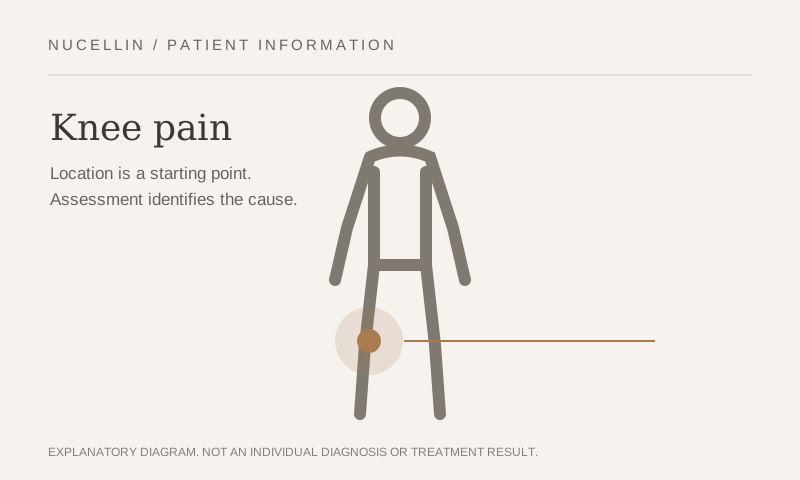
At Nucellin Orthopedic Clinic in Seoul, Dr. Heejun Kim personally assesses knee pain through your symptoms, physical examination, loading pattern and imaging when necessary.
A scan shows structure. It does not always explain pain.
The goal is to identify the source of symptoms and choose the least invasive treatment that can reasonably restore function.
Common Knee Problems
Knee pain may come from:
- Osteoarthritis
- Meniscal injuries
- Ligament injuries or instability
- Patellofemoral pain
- Tendon problems
- Cartilage-related conditions
- Sports or overuse injuries
- Previous injury or surgery
Symptoms such as recurrent swelling, locking, giving way or difficulty with stairs can provide important clues.
Two people with similar MRI or X-ray findings may have very different symptoms. Imaging should therefore be interpreted together with the examination.
Diagnosis
Diagnosis begins with your history and a hands-on examination.
Dr. Kim may assess:
- Location of pain
- Swelling
- Range of motion
- Joint stability
- Meniscus and ligament signs
- Tendon function
- Strength and movement
- Activities that reproduce symptoms
The purpose is not simply to identify an abnormality, but to determine whether it actually explains the patient's symptoms.
Imaging
X-rays may be used to assess osteoarthritis, joint-space narrowing, alignment and previous injury.
Musculoskeletal ultrasound may evaluate selected tendons, joint fluid, soft tissues and other structures around the knee. It can also guide targeted procedures when appropriate.
MRI is not required for every painful knee. If MRI would change the treatment plan, imaging can be arranged at a nearby radiology centre and reviewed by Dr. Kim.
Treatment
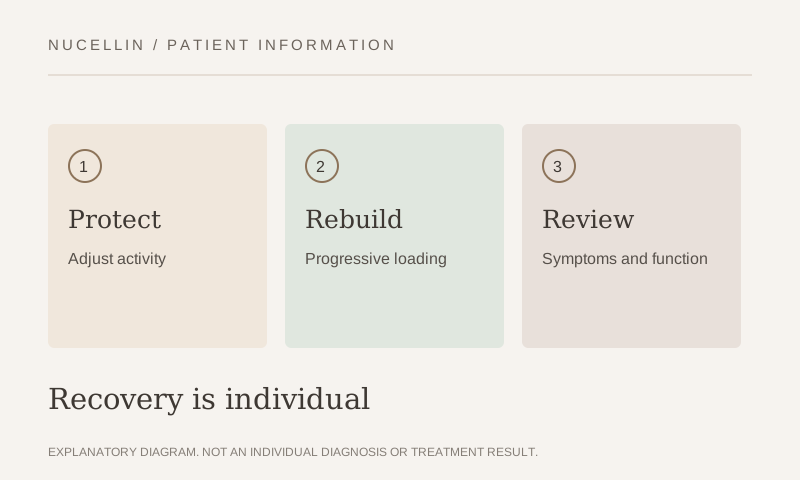
Treatment depends on the diagnosis, severity of the condition and your functional goals.
Options may include:
- Load modification and rehabilitation
- Regenerative Physical Therapy
- Shockwave Therapy
- Image-guided injections
- Activated PRF Therapy
- Selected cell-based regenerative treatments
- Surgical referral when necessary
Treatment is introduced step by step. A procedure should not be selected simply because an X-ray or MRI shows degeneration.
Activated PRF
For selected patients with symptomatic osteoarthritis, cartilage-related pain, chronic tendon problems or other appropriate knee conditions, Dr. Kim may recommend Activated PRF Therapy.
Activated PRF is prepared from the patient's own blood using Nucellin's mechanically activated platelet- and fibrin-based protocol.
The treatment is intended to support the biologic environment of the affected tissue, but results vary according to the diagnosis and severity of the condition.
Learn more about Activated PRF Therapy →
Cell-Based Treatment
Selected patients with symptomatic knee degeneration may be considered for autologous blood-, bone marrow- or adipose-derived cell-based treatment.
These treatments are not appropriate for every patient with knee pain. Suitability depends on the stage of degeneration, alignment, joint stability, remaining joint space and the patient's goals.
Learn more about Cell-Based Therapy →
When Surgery May Be Appropriate
Non-surgical treatment is not always the right answer.
A surgical opinion may be appropriate when there is:
- A mechanically locked knee
- Major ligament instability
- A displaced meniscal tear or loose body
- Major traumatic injury or fracture
- Severe deformity
- Advanced arthritis with substantial loss of function
The goal is not to avoid surgery at all costs, but to determine when non-surgical treatment is reasonable and when surgery may provide a better result.
When to Seek Medical Attention
Arrange an assessment if your knee pain:
- Persists or repeatedly returns
- Causes recurrent swelling
- Limits walking, stairs or exercise
- Repeatedly gives way
- Causes progressive stiffness
- Has not improved despite previous treatment
Seek urgent medical care for a locked knee, inability to bear weight after injury, severe swelling, obvious deformity, or a hot and swollen knee with fever.
International Patients
International patients can consult directly with Dr. Kim in English.
You may send or bring previous X-rays, MRI images and medical reports. Same-day consultation, ultrasound assessment and selected treatments may be possible when medically appropriate.
If MRI is required, we can arrange imaging at a nearby radiology centre.
Bone marrow- and adipose-derived procedures require separate planning.
A worn joint is not always a failed joint.
Contact Nucellin Orthopedic Clinic →
Discuss your next step
Bring your questions and any existing medical records to your consultation.
Contact the clinic