Recovery room with private sauna at Nucellin Orthopedic Clinic in Seoul

Regenerative Physical Therapy

Rehabilitation that rebuilds capacity, not just symptom relief. Planned and reassessed by the treating physician.

Medically reviewed by Dr. Kim Hee-Jun, board-certified orthopedic specialist, Nucellin Orthopedic Clinic, Seoul. Last reviewed 30 August 2026. This page is written for patients and is not a substitute for examination.

A physician-led rehabilitation approach that combines accurate diagnosis, load management, progressive exercise and selected device-based treatments to restore movement and function.

Regenerative Physical Therapy does not mean that a machine or manual technique can regrow a completely new tendon, cartilage surface or joint. At Nucellin Orthopedic Clinic, the term describes rehabilitation designed to improve the conditions in which recovery can occur and to help the body tolerate meaningful activity again.

On this page

  1. What Regenerative Physical Therapy is
  2. Why diagnosis comes first
  3. What treatment may include
  4. Conditions we may treat
  5. What happens, step by step
  6. Recovery and progression
  7. Rehabilitation after regenerative procedures
  8. Whether it may suit you
  9. Risks and limitations
  10. Questions patients ask

What Regenerative Physical Therapy Is

Regenerative Physical Therapy is the term we use for a structured musculoskeletal rehabilitation programme built around three questions:

  • What structure or system is most likely generating the symptoms?
  • What can the patient currently tolerate?
  • What must improve for the patient to return to meaningful activity?

It may combine:

  • Clinical examination
  • Palpation and movement assessment
  • Load modification
  • Mobility work
  • Progressive strengthening
  • Balance and movement-control training
  • Manual and soft-tissue treatment
  • Focused shockwave therapy
  • Radial pressure-wave therapy
  • High-intensity laser therapy
  • Bracing or temporary protection
  • Return-to-work or return-to-sport planning
  • Rehabilitation after Activated PRF or cell-based treatment

The treatment plan is not selected from a fixed menu.

Two people with pain in the same location may require different programmes because their diagnoses, tissue capacity, movement patterns and functional goals are different.

Rehabilitation is intended to optimise function and reduce the effect of a health condition on everyday life, work and meaningful activity.

A Note on the Term “Regenerative”

“Regenerative Physical Therapy” is not a universally standardised medical specialty or a guarantee of biological tissue regeneration.

At Nucellin, the term describes a rehabilitation approach that aims to:

  • Support tissue recovery
  • Restore movement options
  • Improve strength and coordination
  • Reduce repeated mechanical overload
  • Rebuild tolerance for daily and athletic activity
  • Support recovery after biologic procedures

The word *regenerative* does not mean that every treatment directly creates new tissue.

Exercise, manual treatment, shockwave therapy and laser treatment have different mechanisms and different levels of evidence. They are selected according to the diagnosis rather than presented as interchangeable ways to “regenerate” the body.

The Goal Is Capacity, Not Temporary Relief

Pain relief matters, but it is not the only measure of recovery.

A patient may feel temporarily better after passive treatment and still be unable to:

  • Climb stairs
  • Lift an object
  • Sit through a working day
  • Walk a meaningful distance
  • Sleep comfortably
  • Return to running or sport
  • Trust the injured area under load

Regenerative Physical Therapy aims to improve what the patient can do, not simply how the area feels immediately after treatment.

Progress may be measured through changes such as:

  • Greater range of motion
  • Improved strength
  • Better balance or coordination
  • Longer walking or sitting tolerance
  • Reduced frequency of flare-ups
  • Improved work capacity
  • Safer return to exercise
  • Greater confidence in movement

Why Rest Alone Is Often Not Enough

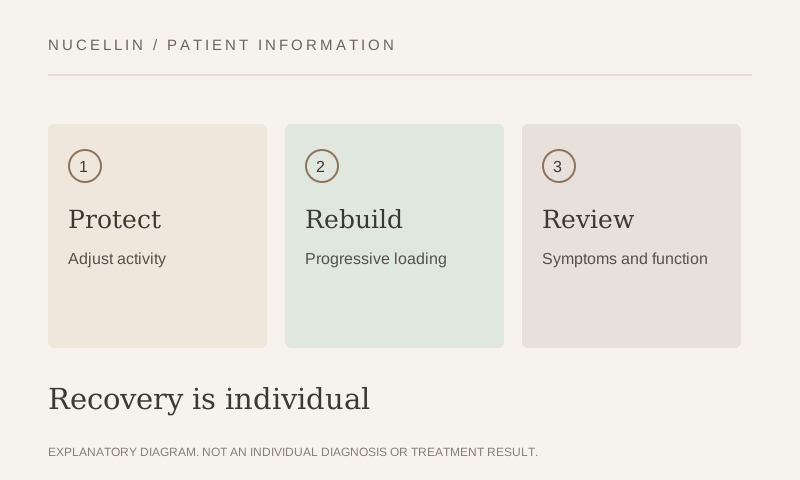
Temporary protection may be necessary after an acute injury or procedure.

However, prolonged avoidance of movement can contribute to:

  • Reduced strength
  • Loss of mobility
  • Lower tissue capacity
  • Poorer balance and coordination
  • Increased sensitivity when activity resumes
  • Loss of confidence in the injured area

The alternative is not to push through severe pain without guidance.

The useful middle is appropriately dosed movement: enough stimulus to support recovery without repeatedly exceeding the tissue’s current capacity.

Why Diagnosis Comes First

Physical therapy is less effective when it is directed at the wrong problem.

Pain in one area may be referred from another structure. For example:

  • Shoulder pain may arise from the neck.
  • Arm pain may come from a nerve or an overloaded muscle chain.
  • Hip pain may be referred from the lumbar spine.
  • Buttock pain may arise from the hip, hamstring or surrounding soft tissues.
  • Knee pain may reflect a tendon, joint, kneecap or movement-control problem.
  • Ankle instability may persist because balance and neuromuscular control never recovered.

The same exercise, stretch or device should not be applied to every patient with the same pain location.

At Nucellin Orthopedic Clinic, Dr. Kim personally evaluates each patient and can conduct the consultation in English.

The assessment may include:

  • Symptom history
  • Previous injury or surgery
  • Review of work and exercise demands
  • Palpation
  • Range-of-motion testing
  • Strength testing
  • Joint stability testing
  • Balance and movement assessment
  • Neurologic examination
  • Review of X-rays, ultrasound or MRI
  • Evaluation of the movements that reproduce the symptoms

The purpose is to identify both the likely pain generator and the factors preventing recovery.

Palpation Matters, but It Is Not Used Alone

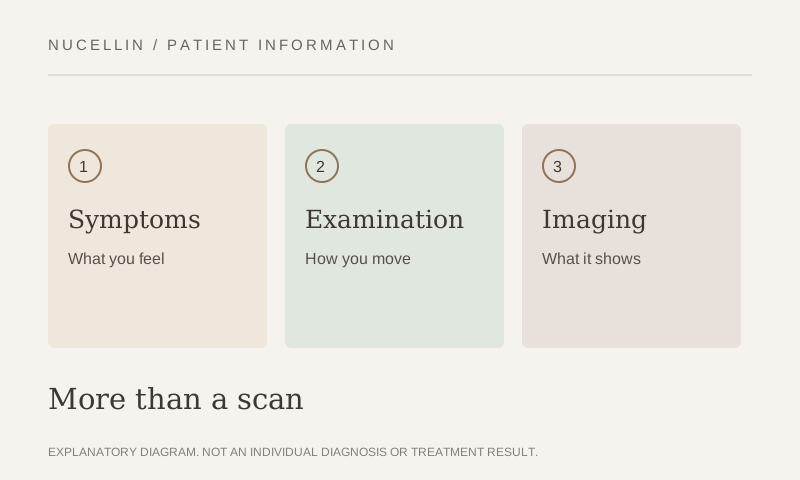
Hands-on examination can provide information that imaging cannot.

Palpation may help determine:

  • Which structure reproduces the patient’s familiar pain
  • Whether surrounding muscles are overloaded
  • Whether a tendon insertion is sensitive
  • Whether symptoms follow a soft-tissue or nerve-related pattern
  • Which areas are compensating for the primary problem

However, tenderness alone does not prove a diagnosis.

Palpation is interpreted together with movement, strength, neurologic findings and imaging when appropriate.

Imaging Is Interpreted in Context

X-rays, ultrasound and MRI can provide important structural information.

They do not directly measure:

  • Pain
  • Muscle capacity
  • Movement control
  • Balance
  • Confidence
  • Daily load tolerance
  • Ability to perform work or sport

An imaging abnormality may be relevant, incidental or only one part of the problem.

The scan provides evidence. The clinical examination determines what that evidence means.

Three Common Rehabilitation States

Patients with similar imaging may need different treatment because their current functional state is different.

1. The Area Is Highly Irritable

The patient may have:

  • Acute pain
  • Swelling
  • Protective muscle guarding
  • Severe movement restriction
  • Poor tolerance for basic activity

The initial priorities may be:

  • Protecting the injured structure
  • Reducing excessive irritation
  • Maintaining safe movement
  • Preventing unnecessary loss of strength
  • Determining whether further imaging or surgical evaluation is needed

Aggressive strengthening or stretching may be inappropriate at this stage.

2. The Area Is Under-Capacitated

The patient may be able to move but repeatedly develops pain when work, exercise or daily activity increases.

Treatment may focus on:

  • Progressive strengthening
  • Tendon or joint loading
  • Balance and coordination
  • Improving movement control
  • Gradually increasing functional demand
  • Changing the repeated activity that exceeds current capacity

3. The Primary Area Has Improved, but the System Has Not

Pain may have decreased after rest, an injection or another procedure, but the patient may still have:

  • Weakness
  • Reduced balance
  • Altered movement
  • Fear of reinjury
  • Poor endurance
  • Recurrent flare-ups when activity resumes

In this stage, rehabilitation focuses on rebuilding the wider system rather than repeatedly treating the same painful spot.

What Treatment May Include

Load Modification

Load modification means changing the dose of activity rather than stopping all movement.

The plan may involve adjusting:

  • Exercise volume
  • Running distance
  • Weight used during lifting
  • Repetitions
  • Speed
  • Depth of movement
  • Time spent sitting or standing
  • Occupational tasks
  • Recovery between sessions

The goal is to reduce repeated overload while preserving as much safe activity as possible.

Progressive Exercise

Exercise is a central part of rehabilitation for many musculoskeletal conditions.

Depending on the diagnosis, treatment may include:

  • Isometric exercise
  • Concentric and eccentric strengthening
  • Heavy slow resistance
  • Joint mobility exercises
  • Trunk and hip strengthening
  • Rotator-cuff and shoulder-blade training
  • Balance and proprioception
  • Neuromuscular control
  • Walking progression
  • Gradual running or jumping progression
  • Sport-specific training

There is no single “best exercise” for every patient.

The correct exercise performed at the wrong stage or dose may still aggravate symptoms.

For knee osteoarthritis, the AAOS strongly recommends supervised, unsupervised or aquatic exercise over no exercise to improve pain and function. Neuromuscular training may also be combined with conventional exercise to improve selected functional outcomes.

Clinical practice guidance for low back pain similarly supports exercise approaches such as trunk strengthening, endurance, specific muscle activation and movement-control training, selected according to the individual presentation.

Manual and Soft-Tissue Treatment

Hands-on treatment may be used to:

  • Improve short-term movement tolerance
  • Reduce protective muscular tension
  • Address selected joint restrictions
  • Prepare the patient for exercise
  • Help identify the tissues contributing to the symptoms

Treatment may include:

  • Joint mobilisation
  • Assisted range of motion
  • Soft-tissue techniques
  • Muscle and fascial treatment
  • Selected stretching
  • Movement facilitation

Manual treatment is generally used as an adjunct rather than the complete rehabilitation programme.

For knee osteoarthritis, evidence supports exercise more strongly than passive treatment; manual therapy may be added to exercise in selected patients, but the strength of evidence is more limited.

Focused Shockwave Therapy

Focused shockwave therapy may be used when examination identifies a specific tendon, calcific deposit or other accessible soft-tissue target.

Potential applications may include selected cases of:

  • Calcific shoulder tendinopathy
  • Chronic rotator-cuff tendon pain
  • Lateral or medial elbow tendinopathy
  • Patellar tendinopathy
  • Achilles tendinopathy
  • Gluteal tendinopathy
  • Proximal hamstring tendinopathy
  • Plantar fascia-related pain

Focused shockwave directs energy toward a defined target.

It does not repair a complete tendon rupture, restore severe joint instability or replace necessary surgery.

Read more about Shockwave Therapy

Radial Pressure-Wave Therapy

Radial pressure-wave treatment may be used across a broader and generally more superficial area.

It may be considered when surrounding muscle and fascial tissues are overloaded around the primary pain generator.

For example, a programme may use:

  • Focused treatment at a local tendon target
  • Radial treatment across the compensating muscle chain
  • Progressive exercise to change how load is managed

Not every patient requires both forms of treatment.

High-Intensity Laser Therapy

High-intensity laser therapy may be used as an adjunct for selected painful musculoskeletal conditions.

Its role may be to help manage symptoms and improve tolerance for movement or exercise.

It should not be presented as a stand-alone method that regrows cartilage, repairs a complete tendon rupture or reverses advanced degeneration.

At Nucellin, laser treatment is used only when it has a clear role within the wider rehabilitation plan.

Exercise and functional progression remain central.

Bracing, Taping and Temporary Protection

Selected patients may benefit from:

  • An ankle brace
  • Knee support
  • Wrist or forearm support
  • Temporary walking support
  • Taping
  • Activity-specific protection

Support may reduce load while the patient begins rehabilitation.

It should not create unnecessary long-term dependence when strength and control can be restored.

Education and Home Exercise

The patient should understand:

  • What the likely diagnosis is
  • Which activities are currently aggravating the condition
  • Which movements are safe
  • How much discomfort is acceptable during exercise
  • How to progress the programme
  • Which warning signs require reassessment
  • What the realistic recovery timeline is

Education and self-management are active parts of treatment rather than optional additions. For knee osteoarthritis, AAOS guidelines strongly recommend patient education and self-management programmes to improve pain and function.

Conditions We May Treat

Regenerative Physical Therapy may be considered for selected patients with the following conditions.

Neck and Upper Back

  • Mechanical neck pain
  • Postural and occupational overload
  • Shoulder-blade muscle dysfunction
  • Selected cervicogenic headache patterns
  • Chronic upper trapezius overload
  • Recovery after nerve-related symptoms have been appropriately assessed

Progressive arm weakness, hand clumsiness, gait disturbance or spinal-cord signs require medical evaluation rather than routine physical therapy alone.

Lower Back and Pelvis

  • Mechanical low back pain
  • Reduced trunk and hip capacity
  • Recurrent lifting-related pain
  • Gluteal and hamstring-related overload
  • Recovery after selected disc or nerve-root conditions
  • Return to activity after an acute episode

Loss of bladder or bowel control, saddle numbness or progressive leg weakness requires emergency assessment.

Shoulder

  • Rotator-cuff tendinopathy
  • Selected partial tendon injuries
  • Frozen shoulder rehabilitation
  • Shoulder-blade movement dysfunction
  • Recovery after surgery or injection treatment
  • Gradual return to lifting, swimming or racket sports

A traumatic tendon rupture with major weakness may require surgical evaluation.

Elbow, Wrist and Forearm

  • Lateral elbow tendinopathy
  • Medial elbow tendinopathy
  • Chronic forearm overload
  • Recovery after selected partial tendon injuries
  • Grip and upper-limb capacity deficits
  • Return to racket sports, golf or weight training

Progressive hand weakness or persistent numbness requires neurologic assessment.

Hip and Pelvis

  • Gluteal tendinopathy
  • Greater trochanteric pain
  • Proximal hamstring tendinopathy
  • Hip osteoarthritis
  • Reduced hip mobility or strength
  • Walking and running-related overload

The hip, lower back and pelvis may need to be assessed together because symptoms can overlap.

Knee

  • Knee osteoarthritis
  • Patellofemoral pain
  • Patellar or quadriceps tendinopathy
  • Recovery after ligament or meniscal injury
  • Reduced thigh and hip strength
  • Return to running, stairs or sport
  • Rehabilitation before or after regenerative treatment

Ankle and Foot

  • Recovery after an ankle sprain
  • Chronic ankle instability
  • Achilles tendinopathy
  • Selected peroneal or posterior tibial tendon disorders
  • Plantar fascia-related pain
  • Reduced balance and single-leg control
  • Gradual return to running and jumping

Pain may settle before balance and ligament protection have fully recovered. Rehabilitation should not end only because walking is comfortable.

Sports Injuries

Rehabilitation may be used for:

  • Muscle strain
  • Partial tendon injury
  • Ligament sprain
  • Recurrent overload
  • Reduced performance after injury
  • Return-to-sport preparation
  • Prevention of repeated injury

Return to sport should be based on function rather than time alone.

What Happens, Step by Step

1. Medical Consultation

Dr. Heejun Kim personally evaluates each patient and can conduct the consultation in English.

The assessment reviews:

  • Symptoms
  • Injury history
  • Previous treatment
  • Medical conditions
  • Functional limitations
  • Work and sport requirements
  • Existing X-rays, ultrasound or MRI
  • Whether additional imaging is necessary
  • Whether a surgical opinion may be more appropriate

2. Functional Assessment

The assessment may include:

  • Range of motion
  • Strength
  • Balance
  • Walking or running pattern
  • Single-leg control
  • Grip or lifting capacity
  • Movement that reproduces symptoms
  • Palpation of relevant tissues
  • Neurologic screening when appropriate

3. Identification of the Limiting Factor

The main limiting factor may be:

  • Pain
  • Swelling
  • Stiffness
  • Weakness
  • Instability
  • Reduced coordination
  • Tendon sensitivity
  • Nerve irritation
  • Fear or lack of confidence
  • Excessive daily load

Treatment is directed toward the factor that is currently limiting recovery.

4. Individual Treatment Session

A session may include a combination of:

  • Education
  • Load adjustment
  • Manual treatment
  • Mobility work
  • Strengthening
  • Balance or movement training
  • Focused shockwave
  • Radial pressure-wave treatment
  • High-intensity laser therapy
  • Functional retraining

The contents and duration of the session depend on the diagnosis and treatment goals.

5. Home Programme

The home programme is designed to continue progress between clinic visits.

It may include:

  • Mobility exercises
  • Strength work
  • Balance training
  • Walking progression
  • Activity restrictions
  • Symptom monitoring
  • Return-to-sport steps

A large number of exercises is not necessarily better.

The programme should be practical enough to follow consistently.

6. Reassessment

Progress is measured by function rather than pain alone.

Reassessment may include:

  • Range of motion
  • Strength
  • Walking or exercise tolerance
  • Balance
  • Work capacity
  • Sleep
  • Frequency of flare-ups
  • Ability to perform the original painful activity

If progress is not occurring, the diagnosis or treatment strategy should be reconsidered rather than repeating the same treatment indefinitely.

Recovery and Progression

There is no single recovery timeline for every condition.

The programme depends on:

  • Diagnosis
  • Duration of symptoms
  • Structural damage
  • Age and general health
  • Previous injury or surgery
  • Work and sport demands
  • Treatment performed
  • Participation in rehabilitation

The following is a general framework rather than a guarantee.

Early Phase

The initial goals may include:

  • Reducing excessive irritation
  • Protecting the injured structure
  • Restoring comfortable basic movement
  • Preventing unnecessary loss of strength
  • Teaching the patient how to manage daily load

Capacity-Building Phase

Treatment may progress toward:

  • Greater range of motion
  • Progressive resistance exercise
  • Tendon or joint loading
  • Balance and coordination
  • Increased walking or work tolerance
  • Reduced dependence on passive treatment

Functional Phase

The programme becomes more specific to the patient’s goals.

This may include:

  • Lifting
  • Running
  • Jumping
  • Cutting or changing direction
  • Throwing
  • Racket-sport movement
  • Long-distance walking
  • Return to manual work

Independent Management

The final goal is not permanent dependence on clinic treatment.

Patients should understand how to:

  • Continue strengthening
  • Adjust load during flare-ups
  • Recognise warning signs
  • Progress activity independently
  • Maintain function over time

Understanding Flare-Ups

A temporary increase in discomfort does not always mean that new structural damage has occurred.

It may indicate that:

  • Exercise volume increased too quickly
  • The tissue was not ready for the load
  • Recovery between sessions was insufficient
  • Technique or movement strategy needs adjustment
  • Another pain generator has not been recognised

However, new major weakness, instability, swelling, deformity or neurologic symptoms require reassessment.

Rehabilitation After Activated PRF or Cell-Based Treatment

Rehabilitation is an important part of recovery after biologic procedures.

An injection may influence the local tissue environment, but the treated area must still regain movement, strength and load tolerance.

The programme is adjusted according to:

  • The treated structure
  • The procedure performed
  • Severity of the underlying condition
  • Number of treatment sites
  • Post-procedure soreness
  • Medical history
  • Functional goals

After Activated PRF

The programme may include:

  • Temporary reduction of strenuous load
  • Gentle movement during the early period
  • Gradual restoration of range of motion
  • Progressive strengthening
  • Correction of repeated overload
  • Return to work or sport in stages

Post-procedure soreness may occur for several days.

The area should not be tested repeatedly with heavy exercise simply to determine whether the injection has worked.

Read more about Activated PRF Therapy

After Blood-, Bone Marrow- or Adipose-Derived Treatment

The rehabilitation plan may require additional protection and slower progression depending on:

  • Harvest procedure
  • Target joint or tissue
  • Stage of degeneration
  • Number of areas treated
  • Physician instructions

Cell-based treatment does not eliminate the need to restore muscle strength and movement capacity.

Read more about Stem Cell and Cell-Based Therapy

Rehabilitation Before a Procedure

Some patients benefit from rehabilitation before undergoing a regenerative procedure.

Preparation may aim to:

  • Reduce excessive irritation
  • Improve basic movement
  • Restore surrounding strength
  • Teach the post-procedure programme
  • Identify activities that repeatedly overload the tissue
  • Determine whether the patient improves without an invasive procedure

Needing preparation does not mean treatment is being unnecessarily delayed.

It means the procedure is being placed into a more complete recovery plan.

Whether Regenerative Physical Therapy May Suit You

You May Be a Reasonable Candidate If

  • Pain has continued despite basic rest or medication
  • Symptoms repeatedly return when activity increases
  • You have lost strength, mobility or confidence
  • You want to return to work, exercise or sport
  • An injection reduced pain but function has not fully recovered
  • You are preparing for or recovering from Activated PRF or cell-based treatment
  • You are willing to participate actively in treatment
  • You can follow a home programme and load-management plan

It May Not Be the Right First Step If

  • There is an undiagnosed acute fracture
  • There is a complete tendon rupture requiring repair
  • There is major mechanical instability
  • There is an active joint or soft-tissue infection
  • There is a suspected tumour
  • There is progressive neurologic weakness
  • There are signs of spinal-cord compression
  • There is severe joint destruction for which surgery offers a more predictable result
  • The patient is medically unable to participate safely
  • Emergency evaluation is required

Rehabilitation should not be used to postpone necessary surgery or urgent investigation.

Risks and Limitations

Physical therapy and exercise are generally non-surgical, but they are not entirely risk-free.

Potential effects may include:

  • Temporary muscle soreness
  • A temporary increase in pain
  • Fatigue
  • Bruising or tenderness after manual treatment
  • Skin irritation after device-based treatment
  • Aggravation of symptoms if load is progressed too quickly
  • Falls or loss of balance during exercise
  • Failure to achieve meaningful improvement

Device-specific risks and contraindications vary.

Before treatment, patients should inform the clinic about:

  • Pregnancy
  • Pacemakers or implanted electronic devices
  • Cancer
  • Active infection
  • Bleeding disorders
  • Anticoagulant medication
  • Recent fracture
  • Osteoporosis
  • Recent surgery
  • Progressive numbness or weakness
  • Previous adverse reactions to treatment

The programme should be modified when the patient’s medical condition or tissue status requires additional caution.

A Realistic View of Regenerative Physical Therapy

Regenerative Physical Therapy cannot guarantee:

  • Complete elimination of pain
  • Restoration of all lost cartilage
  • Repair of a complete tendon rupture
  • Correction of severe instability
  • Reversal of advanced arthritis
  • Prevention of every future flare-up
  • Avoidance of surgery

Realistic goals may include:

  • Improving movement
  • Increasing strength
  • Reducing the frequency of flare-ups
  • Improving tolerance for work and exercise
  • Restoring confidence
  • Supporting recovery after a procedure
  • Helping the patient manage symptoms independently
  • Delaying more invasive treatment when medically reasonable

The goal is not to keep the patient in treatment indefinitely.

The goal is to help the patient regain capacity and return to meaningful activity.

Questions Patients Ask

Is Regenerative Physical Therapy Different From Standard Physical Therapy?

The core principles of good rehabilitation remain the same: accurate assessment, education, progressive exercise and functional recovery.

At Nucellin, the term *Regenerative Physical Therapy* emphasises integration with physician assessment, imaging review, shockwave therapy, high-intensity laser therapy and rehabilitation before or after biologic procedures.

It does not mean that standard rehabilitation principles are replaced.

Does It Regrow Cartilage or Tendons?

No physical-therapy programme can guarantee complete cartilage or tendon regeneration.

Rehabilitation aims to improve strength, movement, load tolerance and function.

Is It Only for Patients Receiving PRF or Stem Cell Treatment?

No.

Many patients receive Regenerative Physical Therapy without undergoing an injection or cell-based procedure.

In some cases, rehabilitation alone may be the most appropriate treatment.

Will Treatment Be Painful?

Some exercises or treatments may produce temporary discomfort.

Treatment should not be designed to cause maximum pain.

The level of discomfort is adjusted according to:

  • Diagnosis
  • Tissue condition
  • Treatment stage
  • Patient response
  • Functional goal

Sharp, progressively worsening or neurologic symptoms should be reported.

Is Manual Therapy Included?

Manual or soft-tissue treatment may be included when it has a clear clinical purpose.

It is usually combined with active rehabilitation rather than used as the entire treatment plan.

Are Shockwave and Laser Used at Every Session?

No.

They are used only when they are appropriate for the diagnosis and treatment stage.

A device is not selected simply because it is available.

How Many Sessions Will I Need?

There is no fixed number for every patient.

The plan depends on:

  • Diagnosis
  • Duration of symptoms
  • Functional limitation
  • Structural condition
  • Treatment response
  • Home-programme participation
  • Work and sport goals

The programme should be reassessed rather than continued automatically.

How Long Is Each Session?

The duration depends on the complexity of the condition and treatments used.

International patients with limited time in Seoul may be advised to undergo a longer, more comprehensive session when medically appropriate.

Can I Exercise on the Same Day?

This depends on:

  • The condition being treated
  • Exercise intensity
  • Whether shockwave or another device was used
  • Whether a regenerative injection was recently performed
  • The patient’s symptoms

Light activity may be appropriate, while heavy or repetitive loading may need to be reduced temporarily.

Can I Receive Treatment After Activated PRF?

Yes, but the timing and intensity must be coordinated with the treated tissue and Dr. Kim’s instructions.

Rehabilitation after Activated PRF should progress gradually rather than beginning with aggressive loading.

Can I Fly After Treatment?

Most patients can fly after an uncomplicated physical-therapy session.

Travel recommendations may differ when treatment is combined with an injection, deeper procedure or recent surgery.

Do I Need an MRI First?

Not every patient requires MRI.

The need for imaging depends on the symptoms, physical examination, existing X-rays or ultrasound and whether the result would change the treatment plan.

Nucellin Orthopedic Clinic does not have an on-site MRI scanner. When MRI is medically appropriate, imaging can be arranged at a nearby radiology centre and reviewed with you.

International Patients

International patients can consult directly with Dr. Kim in English.

You may send or bring:

  • X-rays
  • MRI images
  • Ultrasound images
  • Medical reports
  • Previous treatment records
  • Current medication information

Imaging is reviewed together with symptoms and physical examination rather than interpreted in isolation.

Same-day consultation and Regenerative Physical Therapy may be possible when medically appropriate.

The recommended treatment plan, session duration, number of visits and written estimate are discussed before treatment.

For patients with limited time in Seoul, the plan may focus on:

  • Clear diagnosis
  • A comprehensive treatment session
  • A practical home programme
  • Travel and activity guidance
  • Remote follow-up when clinically appropriate

Information about insurance and payment is available on the Insurance & Payment page.

To arrange an evaluation, please contact the clinic.

Start with an informed medical assessment, then build the capacity to move again.

Ready to rebuild, not just rest?

Start with an informed medical assessment, not a procedure.

WhatsApp