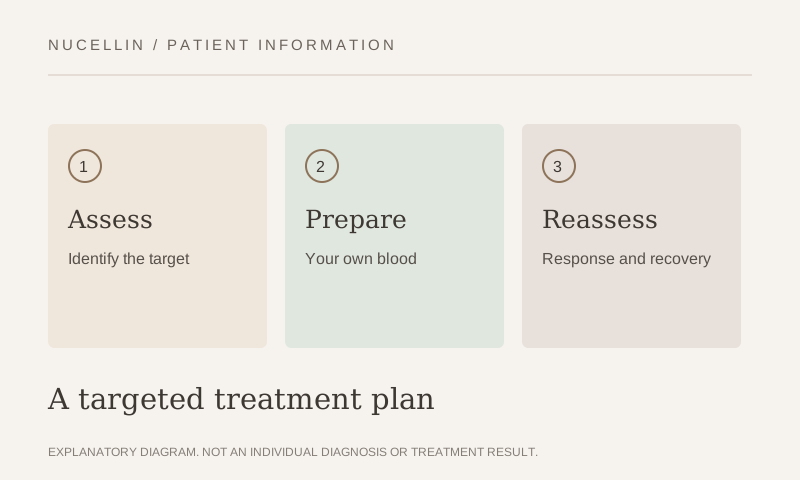
Medically reviewed by Dr. Kim Hee-Jun, board-certified orthopedic specialist, Nucellin Orthopedic Clinic, Seoul. Last reviewed 30 August 2026. This page is written for patients and is not a substitute for examination.
A personalised platelet- and fibrin-based treatment prepared from your own blood and delivered to a carefully selected musculoskeletal target.
Activated PRF is not a general injection for every painful joint or tendon. Its value depends on identifying the true pain generator, selecting an appropriate patient and combining the procedure with a structured recovery plan.
What Activated PRF Is
Activated platelet-rich fibrin, or Activated PRF, is an autologous treatment prepared from the patient’s own peripheral blood.
At Nucellin Orthopedic Clinic, approximately 60 mL of blood is generally collected for each treatment site. The blood is processed according to the clinic’s protocol and mechanically activated to prepare a platelet- and fibrin-rich product.
The preparation is then delivered to a clearly identified joint, tendon, ligament or surrounding soft-tissue target using ultrasound or fluoroscopic guidance when appropriate.
No donor tissue is used.
Activated PRF is not:
- A stem cell treatment
- A corticosteroid injection
- A synthetic medication
- A donor-derived biologic product
- A purified exosome treatment
- A procedure that guarantees tissue regeneration
Its purpose is to support the local biologic environment around a carefully selected treatment target.
A Note on the Name
The terminology used for platelet-based treatments is not completely standardised.
Treatments described as PRP, injectable PRF, platelet-rich fibrin, platelet-rich fibrin matrix or other platelet concentrates may differ substantially in:
- The amount of blood collected
- Platelet concentration
- White and red blood cell content
- Anticoagulant use
- Activation method
- Centrifugation protocol
- Fibrin structure
- Final treatment volume
- Injection technique
Platelet-based products and treatment protocols remain highly variable, which is one reason results from one preparation cannot automatically be applied to another.
On this website, Activated PRF refers specifically to the preparation and activation protocol used at Nucellin Orthopedic Clinic.
It should not be assumed to be identical to every product called PRF at another clinic.
How Activated PRF Differs From Conventional PRP
Both conventional PRP and Activated PRF are prepared from the patient’s own blood.
However, they are not necessarily the same treatment.
Conventional PRP
PRP generally refers to a liquid plasma preparation containing a platelet concentration above that of whole blood.
Depending on the commercial system and clinic protocol, PRP may differ in:
- Blood volume
- Platelet dose
- White blood cell concentration
- Anticoagulant use
- Activation method
- Number of centrifugation steps
- Final injection volume
The term PRP alone does not describe one standardised product.
Activated PRF at Nucellin
The Activated PRF protocol at Nucellin is intended to combine platelet-associated signalling with a fibrin-rich environment around the treatment site.
The process generally includes:
- Approximately 60 mL of the patient’s blood per treatment site
- A clinic-specific preparation protocol
- Mechanical platelet activation
- No anticoagulant added to the final treatment preparation
- Image-guided delivery when medically appropriate
- A recovery plan based on the tissue being treated
Injectable PRF preparations without anticoagulants have been described in the scientific literature, although protocols and applications vary substantially.
It would not be accurate to claim that every PRF preparation is superior to every PRP preparation.
The clinically important questions are:
What preparation is being used?
What is the actual treatment target?
Is the diagnosis correct?
Is the patient an appropriate candidate?
What rehabilitation follows the procedure?
Activated PRF Is Not Stem Cell Therapy
Activated PRF and cell-based treatment are separate procedures.
Activated PRF is primarily a platelet- and fibrin-based preparation produced from peripheral blood.
Stem cell and cell-based treatments may use cellular preparations obtained from:
- Peripheral blood
- Bone marrow
- Adipose tissue
These treatments contain different biologic components and involve different collection and processing methods.
Activated PRF should not be described as a smaller or simpler version of stem cell therapy.
The two may sometimes be considered at different stages of treatment, but they are not interchangeable.
How Activated PRF May Work
Platelets are involved in clotting, inflammatory regulation and tissue-response signalling.
When platelets are activated, they release multiple signalling proteins and other biologically active components. The fibrin component may provide a local matrix that helps retain parts of the preparation around the treatment site.
The intended clinical goals may include:
- Supporting a more favourable local biologic environment
- Modulating excessive inflammatory signalling
- Supporting the tissue response to rehabilitation
- Improving pain and function
- Helping the treated area tolerate load more effectively
Platelet-based therapies are being studied for their effects on inflammation, cellular signalling and tissue repair, but their mechanisms and clinical effects vary according to preparation and condition.
These proposed effects do not mean that Activated PRF directly constructs a completely new tendon, ligament or joint.
It cannot reliably:
- Restore all lost cartilage
- Return a severely arthritic joint to a young condition
- Reattach a completely ruptured tendon
- Correct major ligament instability
- Reverse significant nerve compression
- Remove a loose body
- Correct major deformity
The procedure is only one part of treatment.
The Treatment Target Matters
A technically accurate injection into the wrong structure remains the wrong treatment.
Before recommending Activated PRF, Dr. Kim evaluates whether:
- The imaging findings match the symptoms
The familiar pain can be reproduced during examination
- The symptoms arise from a joint, tendon, ligament or another structure
The condition is primarily mechanical, inflammatory, degenerative or neurologic
The tissue can reasonably respond to non-surgical treatment
- Surgery would provide a safer or more predictable result
The result may also be influenced by:
- Stage of structural damage
- Joint alignment and stability
- Muscle strength
- General and metabolic health
- Smoking
- Previous injections or surgery
- Daily activity and occupational load
- Rehabilitation
- Realistic treatment goals
The decision behind the procedure is often more important than the procedure itself.
What the Evidence Means
Platelet-based treatments have been studied in knee osteoarthritis, tendon disorders and several other musculoskeletal conditions.
The results are mixed.
Some studies and meta-analyses report clinically relevant improvement in pain or function, particularly in selected patients with knee osteoarthritis. Other trials and reviews report smaller or uncertain benefits. Product composition and platelet concentration may influence outcomes, but preparation methods remain inconsistent.
Evidence specifically evaluating PRF in orthopaedic and sports medicine remains more limited, and published studies use different preparation and dosing protocols. Conflicting results have been reported across tendon, cartilage and surgical applications.
High-quality clinical evidence evaluating the exact Activated PRF protocol used at Nucellin is currently limited.
We therefore present Activated PRF as a selective treatment option rather than a guaranteed cure or universally superior procedure.
Conditions We May Consider It For
Candidacy is decided after clinical examination and imaging review rather than from a diagnosis name alone.
Activated PRF may be considered for selected patients with the following conditions.
- Knee and Other Joint Conditions
Potential indications may include:
- Symptomatic knee osteoarthritis
- Selected early or moderate degenerative joint conditions
- Cartilage-related joint pain
- Persistent joint irritation after appropriate conservative treatment
- Selected post-traumatic degenerative conditions
Response may be less predictable when there is:
- Advanced bone-on-bone arthritis
- Severe deformity
- Major loss of joint space
- Significant mechanical instability
Severe functional limitation for which joint replacement is more appropriate
Activated PRF does not guarantee cartilage regrowth or avoidance of joint-replacement surgery.
- Tendon Conditions
Activated PRF may be considered in selected cases of:
- Lateral elbow tendinopathy
- Medial elbow tendinopathy
- Rotator-cuff tendinopathy
- Selected partial rotator-cuff injuries
- Patellar tendinopathy
- Achilles tendinopathy
- Gluteal tendinopathy
- Proximal hamstring tendinopathy
- Distal biceps or triceps tendon-related pain
- Other chronic accessible tendon conditions
A complete or significantly retracted tendon rupture may require surgical repair rather than an injection.
- Ligament and Periarticular Conditions
Potential indications may include:
- Chronic ligament-related pain
- Selected partial ligament injuries
- Periarticular soft-tissue conditions
- Persistent symptoms despite appropriate rehabilitation
Activated PRF cannot mechanically stabilise a severely unstable joint.
Spine and Surrounding Soft Tissues
Activated PRF may be considered in carefully selected patients when the examination identifies a specific:
- Facet-related target
- Ligamentous target
- Peripheral neural target
- Muscle or fascial target
- Other accessible soft-tissue pain generator
It should not be presented as a routine cure for:
- Disc degeneration
- Disc herniation
- Spinal stenosis
- Significant nerve compression
- Progressive neurologic weakness
- Spinal-cord compression
Evidence for platelet-based treatment in spinal conditions is less established than for several peripheral joint and tendon conditions.
Peripheral Nerve and Soft-Tissue Conditions
Selected image-guided treatment may be considered around an identified peripheral nerve or soft-tissue plane when the symptoms and examination support that target.
Progressive weakness, substantial sensory loss or severe nerve compression requires separate neurologic or surgical assessment.
What Happens, Step by Step
1. Consultation
Dr. Heejun Kim personally evaluates each patient and can conduct the consultation in English.
The assessment may include:
- Symptom history
- Physical examination
- Palpation
- Range-of-motion testing
- Strength testing
- Neurologic examination
- Review of X-rays, ultrasound or MRI
- Review of previous treatment
- Functional and activity goals
Assessment of whether surgery may be more appropriate
The first decision is whether Activated PRF is appropriate at all.
2. Identification of the Treatment Target
The proposed treatment site should match:
- The location of symptoms
- Physical examination findings
- Movements that reproduce the pain
- Strength and functional limitations
- Ultrasound, X-ray or MRI findings
An abnormal MRI finding alone is not enough to select the treatment site.
3. Blood Collection
Approximately 60 mL of peripheral blood is generally collected for each treatment site.
The required amount may vary according to:
- The number of areas being treated
- The size and location of the target
- The patient’s medical condition
- The final treatment plan
4. Preparation and Mechanical Activation
The blood is processed according to the clinic’s Activated PRF protocol.
The platelet preparation is mechanically activated and prepared for delivery to the selected target.
No donor tissue is added.
The procedure does not involve bone marrow aspiration or adipose harvesting.
5. Image-Guided Delivery
Depending on the location, treatment may be performed using:
- Musculoskeletal ultrasound guidance
- Fluoroscopic guidance
- Another medically appropriate image-guided method
Image guidance helps:
- Confirm the treatment location
- Improve placement accuracy
- Avoid nearby nerves and blood vessels
- Document the procedure
6. Observation and Aftercare
The full visit, including assessment, blood collection, preparation, treatment and initial observation, generally takes approximately 1.5 to 2 hours.
The exact duration depends on the number and location of the treatment sites.
Before leaving, the patient receives individual instructions regarding:
- Activity
- Protection of the treated area
- Medication
- Expected post-procedure soreness
- Warning signs
- Rehabilitation
- Follow-up
Recovery After Activated PRF
Recovery depends on:
- The condition being treated
- Treatment location
- Stage of structural damage
- Number of areas treated
- Baseline health
- Daily activity requirements
- Rehabilitation plan
The following is a general framework rather than a guaranteed schedule.
- The First 24 Hours
Patients may experience:
- Local soreness
- Pressure or fullness around a joint
- Temporary stiffness
- Mild swelling
- Bruising or discomfort at the blood-draw site
Gentle daily activity may be possible, but heavy or repetitive exercise is generally reduced.
Days 2-5
Post-procedure soreness commonly continues for approximately three to five days, although the duration varies.
Some patients temporarily feel more discomfort than before treatment.
This does not automatically indicate a complication. However, severe or progressively worsening symptoms should be reported.
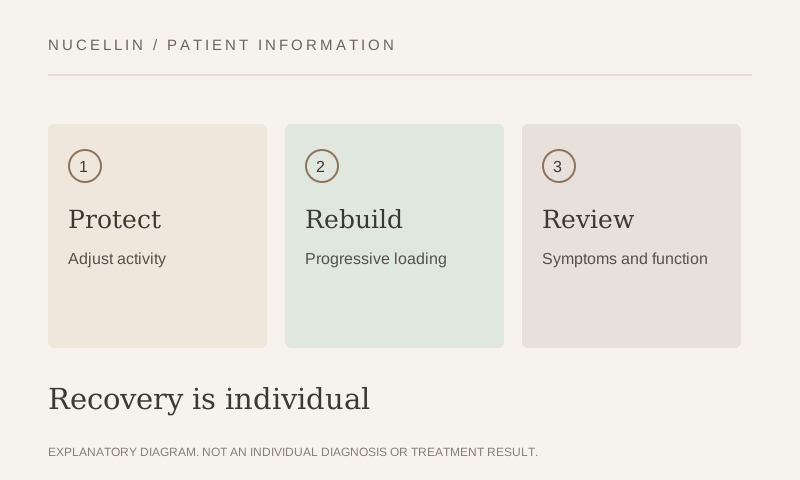
- Weeks 1-3
The initial priorities may include:
- Protecting the treated tissue
- Maintaining safe movement
- Avoiding excessive load
- Beginning or continuing appropriate rehabilitation
- Monitoring the clinical response
Activated PRF is not intended to act like a local anaesthetic or corticosteroid injection.
Immediate pain relief is therefore not required.
- Weeks 3-8
Where improvement occurs, patients may notice changes in:
- Daily function
- Walking or exercise tolerance
- Sleep
- Range of motion
- Frequency of flare-ups
- Ability to participate in rehabilitation
Functional improvement may occur before a major change in pain scores.
- Months 2-6
Meaningful improvement, when it occurs, may continue to develop over several months.
Recovery is not always linear.
Patients may experience periods of improvement, temporary flare-ups and gradual rebuilding of load tolerance.
No specific result or recovery time can be guaranteed.
Rehabilitation After Activated PRF
Activated PRF does not replace rehabilitation.
The rehabilitation plan may include:
- Temporary reduction of excessive load
- Restoration of range of motion
- Progressive strengthening
- Movement retraining
- Correction of repeated overload
- Treatment of surrounding muscle and soft-tissue dysfunction
- Gradual return to work, exercise or sport
A biologic procedure may influence the local tissue environment.
Rehabilitation determines what the tissue is asked to tolerate afterwards.
Medication Before and After Treatment
Medication instructions are individualised.
Patients should not stop prescribed anticoagulant or antiplatelet medication without first consulting the physician who prescribed it.
The use of anti-inflammatory medication before or after treatment should also be discussed with Dr. Kim rather than changed independently.
Whether Activated PRF May Suit You
- You May Be a Reasonable Candidate If
- Pain has continued despite appropriate rehabilitation or conservative treatment
- A specific pain-generating structure has been identified
- Examination and imaging support the proposed target
- The condition limits meaningful daily function
There is no urgent surgical indication
- You understand that improvement cannot be guaranteed
You are willing to follow the recovery and rehabilitation plan
Your goals are realistic
- Activated PRF May Not Be the Right Treatment If
There is no clear diagnosis or treatment target
There is an active infection
There is a suspected tumour
There is a displaced fracture
There is a complete tendon rupture requiring repair
There is severe mechanical instability
There is a large symptomatic loose body
There is progressive nerve damage
There is spinal-cord compression
Advanced joint destruction is more predictably treated with surgery
- You expect one procedure to reverse years of degeneration
- You cannot follow the required recovery plan
Severe pain does not automatically mean that a more advanced biologic procedure is needed.
The appropriate treatment may instead be:
- Temporary protection
- Load modification
- Rehabilitation
- Medication
- Further diagnostic evaluation
- Surgical repair
- Joint replacement
Knowing when not to perform Activated PRF is part of responsible regenerative care.
Risks and Limitations
Activated PRF is autologous, meaning the preparation comes from the patient’s own blood.
This does not make the procedure risk-free.
Potential risks may include:
- Pain during or after treatment
- Temporary worsening of symptoms
- Swelling
- Bruising
- Bleeding
- Infection
- Dizziness or fainting during blood collection
- Nerve injury
- Blood-vessel injury
- Injury to surrounding structures
- Joint irritation
- Failure to achieve meaningful improvement
- Need for additional treatment
- Need for future surgery
The specific risks depend on the location and procedure performed.
Expected benefits, limitations, alternatives and financial cost are discussed before treatment.
A Realistic View of Activated PRF
Activated PRF should not be presented as a cure for every painful or degenerative condition.
It cannot reliably create:
- A completely new joint
- A normal tendon after a complete rupture
- Full restoration of all lost cartilage
- Permanent protection against future injury
- Guaranteed avoidance of surgery
Realistic goals may include:
- Reducing local tissue irritation
- Improving pain
- Improving function
- Supporting rehabilitation
- Increasing tolerance for work, walking and exercise
- Treating a carefully identified joint, tendon or ligament target
- Delaying more invasive treatment when medically reasonable
The goal is not to promise regeneration.
The goal is to determine whether a targeted autologous platelet- and fibrin-based treatment can provide a meaningful clinical benefit for the individual patient.
Questions Patients Ask
Is Activated PRF the Same as PRP?
No.
Both are prepared from the patient’s own blood, but the blood volume, processing method, anticoagulant use, activation method and final platelet-fibrin structure may differ.
Activated PRF on this website refers specifically to the protocol used at Nucellin Orthopedic Clinic.
Is Activated PRF Stem Cell Therapy?
No.
Activated PRF is primarily a platelet- and fibrin-based treatment.
Blood-, bone marrow- and adipose-derived cellular treatments are separate procedures.
Does Activated PRF Contain Exosomes?
Activated platelets release several biologically active signalling components, and platelet-derived extracellular vesicles are being studied scientifically.
Activated PRF should not be described as a purified or standardised exosome treatment.
The clinical procedure uses the patient’s platelet- and fibrin-based preparation rather than an isolated commercial exosome product.
Does Activated PRF Regrow Cartilage?
Activated PRF cannot be guaranteed to restore all lost cartilage or create a young and normal joint.
Some selected patients may experience improvement in pain or function, but structural regeneration should not be promised.
Can It Repair a Tendon Tear?
Activated PRF may be considered for chronic tendon disorders and selected partial tendon injuries.
It cannot mechanically reattach a completely ruptured or significantly retracted tendon.
Those injuries may require surgical repair.
How Much Blood Is Collected?
Approximately 60 mL is generally collected for each treatment site.
The exact amount depends on the treatment plan.
How Long Does the Treatment Take?
The full visit generally takes approximately 1.5 to 2 hours.
This includes assessment, blood collection, preparation, image-guided treatment and initial observation.
Is the Procedure Painful?
The blood draw is similar to a standard venous blood collection.
The injection may cause pressure or discomfort depending on the location.
Post-procedure soreness commonly lasts approximately three to five days, although it varies between patients and treatment sites.
How Many Sessions Will I Need?
There is no fixed number that is appropriate for every patient.
Some patients undergo one treatment followed by reassessment. Additional treatment is considered only after reviewing:
- Diagnosis
- Structural condition
- Clinical response
- Functional improvement
- Rehabilitation progress
A series of procedures should not be recommended automatically without reassessing the response.
Can I Fly After Treatment?
Many patients can travel after an uncomplicated peripheral joint or tendon treatment.
The recommendation depends on:
- Treatment location
- Number of sites
- Post-procedure pain
- Mobility
- Medical history
- Length of the flight
- Risk of blood clots
- Whether a spinal or deeper procedure was performed
Travel plans should be discussed before booking.
Can I Exercise After Treatment?
Heavy and repetitive activity is generally reduced at first.
The timing of return to exercise depends on the treated structure and diagnosis.
The goal is not prolonged rest. It is gradual and appropriately dosed reloading.
Does Activated PRF Contain Steroid?
No corticosteroid is included in the Activated PRF preparation.
Any additional medication or procedure would be discussed separately.
Is Activated PRF Always Better Than PRP?
No universal claim can be made that every Activated PRF preparation is superior to every PRP preparation.
Platelet-based treatments vary significantly.
The appropriate question is not which label sounds more advanced.
It is which preparation, target and treatment plan are appropriate for the individual patient.
International Patients
International patients can consult directly with Dr. Kim in English.
You may send or bring:
- X-rays
- MRI images
- Ultrasound images
- Medical reports
- Previous treatment records
- Current medication information
Imaging is reviewed together with your symptoms and physical examination rather than interpreted in isolation.
Nucellin Orthopedic Clinic does not have an on-site MRI scanner. When MRI is medically appropriate, imaging can be arranged at a nearby radiology centre and reviewed with you.
Same-day consultation and Activated PRF treatment may be possible when medically appropriate.
The complete visit generally requires approximately 1.5 to 2 hours.
The recommended treatment site, recovery plan, travel schedule and written estimate are discussed before the procedure.
Start with an informed medical assessment, not a procedure.
Discuss your next step
Bring your questions and any existing medical records to your consultation.
Contact the clinic