Shockwave Therapy at Nucellin Orthopedic Clinic in Seoul

Shockwave Therapy

Focused and radial shockwave, used with different roles for the primary pain source and the overloaded chain around it.

Medically reviewed by Dr. Kim Hee-Jun, board-certified orthopedic specialist, Nucellin Orthopedic Clinic, Seoul. Last reviewed 30 August 2026. This page is written for patients and is not a substitute for examination.

A non-invasive treatment using focused shockwaves and radial pressure waves for selected chronic tendon, muscle and soft-tissue conditions.

Shockwave therapy is not simply applied wherever a patient feels pain. Its value depends on identifying the correct tissue, selecting the appropriate type of device and combining treatment with a plan to restore movement and load tolerance.

On this page

  1. What shockwave therapy is
  2. Focused and radial treatment
  3. How it may work
  4. Conditions we may consider it for
  5. What happens, step by step
  6. Recovery and rehabilitation
  7. Whether it may suit you
  8. Risks and limitations
  9. Questions patients ask

What Shockwave Therapy Is

Extracorporeal shockwave therapy is a non-invasive treatment that delivers acoustic energy from a device outside the body into a selected musculoskeletal target.

Despite the name, it is not an electrical shock.

The treatment head is placed against the skin using coupling gel. Acoustic pulses are then delivered toward a tendon, muscle, fascial structure, calcific deposit or other carefully identified target.

Shockwave therapy may be used as part of a treatment plan for selected chronic musculoskeletal conditions, particularly when symptoms have not improved sufficiently with appropriate activity modification and rehabilitation.

It is not:

  • An injection
  • A corticosteroid treatment
  • A platelet or stem cell treatment
  • A replacement for rehabilitation
  • A treatment for every painful area
  • A procedure that guarantees tissue regeneration
  • A substitute for necessary surgery

The International Society for Medical Shockwave Treatment identifies several chronic tendinopathies as established clinical indications, including calcific shoulder tendinopathy, lateral elbow tendinopathy, greater trochanteric pain syndrome, patellar tendinopathy, Achilles tendinopathy and plantar fasciopathy. Proper clinical examination and diagnostic assessment should precede treatment.

Shockwave Therapy Is a Targeted Treatment

Pain location does not always identify the true pain generator.

For example:

  • Pain at the shoulder may come from the rotator cuff, biceps tendon, neck or surrounding muscles.
  • Pain at the outside of the hip may come from the gluteal tendons, lumbar spine or other soft tissues.
  • Pain at the elbow may involve a tendon, joint or nearby nerve.
  • Pain behind the ankle may involve the Achilles tendon, but it may also arise from the joint or another structure.

Before recommending shockwave therapy, we ask:

  • Which tissue reproduces the patient’s familiar pain?
  • Is the problem located in a tendon, muscle, fascia, joint or nerve?
  • Is the condition acute or chronic?
  • Is there a partial or complete tear?
  • Is mechanical instability present?
  • Does the imaging finding match the symptoms?
  • Is shockwave treatment appropriate for the depth and location of the target?
  • Would another treatment provide a more predictable result?

A technically well-delivered treatment aimed at the wrong tissue remains the wrong treatment.

Focused Shockwaves and Radial Pressure Waves

Treatments commonly grouped under the term “shockwave therapy” do not all deliver energy in the same way.

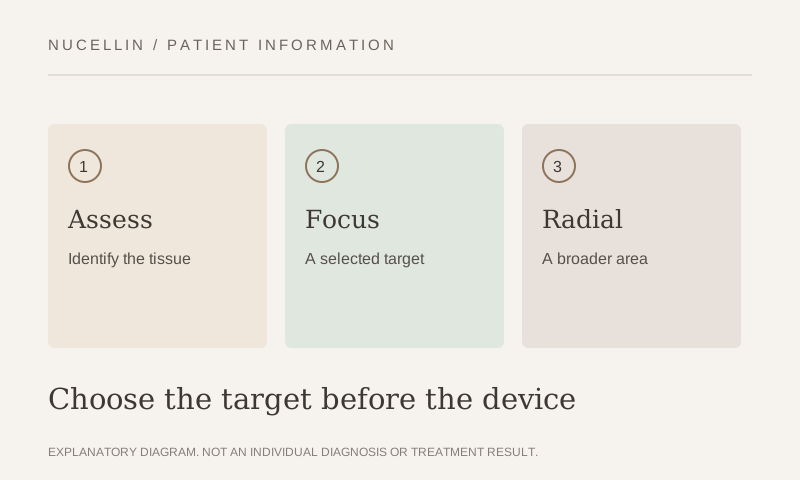
At Nucellin Orthopedic Clinic, both focused shockwave therapy and radial pressure-wave therapy may be used.

They are not interchangeable.

Focused Shockwave Therapy

Focused shockwave therapy concentrates acoustic energy at a defined target.

Depending on the device and settings, the treatment can be directed toward a selected depth beneath the skin.

Focused treatment may be useful when:

  • There is a clearly localised tendon lesion
  • A specific tendon insertion is painful
  • A calcific deposit has been identified
  • The target is relatively deep
  • Treatment requires greater precision
  • Imaging is useful for localisation

Focused shockwave therapy may be guided by:

  • Palpation
  • Musculoskeletal ultrasound
  • X-ray findings
  • Other clinically appropriate imaging

The ISMST recommends focused generators and higher-energy protocols for calcific deposits and specifies that depth and accurate localisation should be considered when treating deeper tissues.

Radial Pressure-Wave Therapy

Radial pressure-wave therapy delivers mechanical pulses that are strongest near the applicator and spread through a broader, relatively superficial treatment area.

It may be useful for:

  • Wider areas of muscular overload
  • Superficial tendon and soft-tissue conditions
  • Surrounding muscle and fascial chains
  • Secondary areas compensating for the primary lesion
  • Selected myofascial pain patterns

Radial treatment can be used across a broader area, but broader treatment does not mean that diagnosis is unnecessary.

The painful structure and the surrounding overloaded tissues should still be identified before treatment.

Why We May Use Both

A patient may have one clearly localised pain-generating structure and a broader chain of overloaded muscles around it.

For example, treatment may involve:

  • Focused shockwave at a specific tendon insertion
  • Radial pressure-wave therapy across the surrounding muscle chain
  • Rehabilitation to correct the load that caused the tissue to remain painful

This does not mean that every patient requires both devices.

The choice depends on:

  • Diagnosis
  • Depth of the target
  • Size of the treatment area
  • Tissue involved
  • Sensitivity of the patient
  • Treatment goals
  • Clinical response

Recent international expert consensus emphasises that focused shockwave and radial pressure-wave treatment should be clearly distinguished and that treatment parameters, target selection and terminology should be documented rather than described simply as generic ESWT.

How Shockwave Therapy May Work

Shockwave therapy applies controlled mechanical energy to biological tissue.

The precise clinical mechanisms are still being investigated. Proposed effects include:

  • Mechanotransduction, in which mechanical stimulation influences cellular signalling
  • Changes in local pain processing
  • Alteration of inflammatory signalling
  • Stimulation of local tissue-response pathways
  • Effects on blood-vessel and tissue remodelling processes
  • Changes in tendon and soft-tissue sensitivity
  • Support for progressive rehabilitation

These effects do not mean that shockwave therapy directly constructs a new tendon or immediately removes all damaged tissue.

The treatment may help create conditions in which the tissue can respond more effectively to rehabilitation and gradually tolerate greater load.

It Is Not Simply Breaking Up Tissue

Shockwave therapy is sometimes described as “breaking up scar tissue” or “smashing calcium.”

That explanation is incomplete.

In calcific shoulder tendinopathy, appropriately selected shockwave treatment may influence the calcific deposit and improve symptoms. However, in many tendon conditions, the aim is not to physically break the tendon apart.

The intended effect is a controlled biological and mechanical stimulus.

The energy should therefore be adjusted according to:

  • The condition
  • Target tissue
  • Device
  • Treatment depth
  • Patient tolerance
  • Previous tissue damage
  • Stage of rehabilitation

Higher intensity is not automatically better.

Pain Relief Is Not the Only Goal

Temporary pain reduction can be useful, but the longer-term goal is improved function.

Treatment response may be assessed by asking:

  • Can the patient walk or run farther?
  • Is gripping or lifting easier?
  • Can the patient sleep with fewer interruptions?
  • Is tendon loading better tolerated?
  • Can rehabilitation be progressed?
  • Are flare-ups becoming less frequent?
  • Can the patient return to work or sport?

The goal is not simply to make the treatment area feel different immediately after a session.

It is to improve what the tissue can do.

What the Evidence Means

The evidence for shockwave therapy is condition-specific.

It should not be described as equally effective for every tendon, joint or painful region.

Evidence is relatively more established for selected chronic conditions such as:

  • Calcific rotator-cuff tendinopathy
  • Plantar fasciopathy
  • Achilles tendinopathy
  • Patellar tendinopathy
  • Lateral elbow tendinopathy
  • Greater trochanteric pain syndrome

However, treatment protocols vary significantly in:

  • Device type
  • Energy level
  • Number of pulses
  • Number and timing of sessions
  • Use of focused or radial treatment
  • Patient selection
  • Comparison treatment
  • Rehabilitation programme

The international best-practice consensus therefore describes shockwave or pressure-wave therapy as an adjunct within a broader treatment algorithm rather than a stand-alone cure.

For calcific rotator-cuff tendinopathy, evidence suggests that shockwave therapy can improve pain and function compared with sham treatment, but results vary according to energy level and comparison treatment. Ultrasound-guided lavage may be more appropriate in some cases.

Evidence for non-calcific shoulder tendinopathy and some upper-limb conditions is less consistent. Reviews have found small or uncertain benefits in some settings and no clear superiority over other appropriate treatments in others.

Recent evidence for hip and pelvic tendinopathies suggests potential improvements in pain and function, but studies remain heterogeneous and adverse effects such as temporary pain or skin irritation can occur.

We therefore present shockwave therapy as a selective treatment option based on diagnosis, not as a universal treatment for pain.

Conditions We May Consider It For

Candidacy is determined after clinical examination and, when necessary, imaging review.

Shoulder Conditions

Shockwave therapy may be considered for selected patients with:

  • Calcific rotator-cuff tendinopathy
  • Chronic rotator-cuff tendon pain
  • Selected biceps or surrounding tendon disorders
  • Persistent shoulder-girdle soft-tissue overload
  • Chronic muscular pain around the shoulder blade

Focused shockwave may be used for a specific calcific or tendon target.

Radial pressure-wave treatment may be used for broader muscular overload around the shoulder girdle.

Shockwave treatment cannot repair:

  • A complete rotator-cuff rupture
  • A significantly retracted tendon
  • Severe shoulder instability
  • Advanced joint destruction

Those conditions may require a different treatment plan or surgical assessment.

Elbow Conditions

Potential indications may include:

  • Chronic lateral elbow tendinopathy
  • Chronic medial elbow tendinopathy
  • Selected distal biceps or triceps tendon-related conditions
  • Chronic forearm muscular overload

Shockwave treatment cannot reattach a completely ruptured distal biceps or triceps tendon.

Sudden bruising, deformity or major loss of strength after an injury requires prompt assessment.

Hip and Pelvic Conditions

Potential indications may include:

  • Gluteal tendinopathy
  • Greater trochanteric pain syndrome
  • Proximal hamstring tendinopathy
  • Selected adductor-related conditions
  • Chronic muscle and fascial overload around the pelvis

Pain around the hip can also arise from the joint or lumbar spine.

The diagnosis should be confirmed before treatment is directed toward the lateral hip or surrounding soft tissues.

Knee Conditions

Shockwave therapy may be considered for selected patients with:

  • Patellar tendinopathy
  • Quadriceps tendon-related pain
  • Selected chronic periarticular tendon conditions
  • Muscular and fascial overload around the thigh and knee

Shockwave is not a treatment for restoring severe cartilage loss inside the knee joint.

When pain primarily arises from osteoarthritis or another intra-articular condition, different treatment options may be more appropriate.

Ankle and Foot Conditions

Potential indications may include:

  • Mid-portion Achilles tendinopathy
  • Insertional Achilles tendinopathy
  • Plantar fasciopathy
  • Selected peroneal tendon conditions
  • Selected posterior tibial tendon-related pain
  • Chronic calf and foot soft-tissue overload

Shockwave therapy does not repair an acute complete Achilles rupture.

A sudden pop, loss of push-off strength or an abnormal tendon contour requires immediate clinical evaluation.

Neck, Back and Myofascial Conditions

Shockwave or radial pressure-wave treatment may be considered when examination identifies an accessible muscle, fascial or tendon-related pain generator around the:

  • Upper trapezius
  • Shoulder blade
  • Upper back
  • Lower back
  • Gluteal region
  • Pelvis
  • Upper hamstring

It is not used to treat:

  • The spinal cord
  • A nerve root inside the spinal canal
  • A disc inside the spine
  • Progressive neurologic weakness
  • Significant spinal instability

Evidence for shockwave treatment in non-specific spinal and myofascial pain is less established than for several chronic tendon conditions.

Treatment in these regions should therefore be based on a clearly identified accessible soft-tissue target and realistic expectations.

Selected Bone Conditions

Focused shockwave therapy has also been investigated for selected delayed bone healing, non-union, stress injuries and other bone conditions.

These applications involve different energy levels, localisation requirements and treatment protocols from routine soft-tissue shockwave therapy.

At Nucellin, suspected fracture, non-union or bone disease requires appropriate imaging and specialist assessment before any treatment plan is considered.

What Happens, Step by Step

1. Consultation

Dr. Heejun Kim personally evaluates each patient and can conduct the consultation in English.

The assessment may include:

  • Symptom history
  • Physical examination
  • Palpation
  • Range-of-motion testing
  • Strength testing
  • Neurologic examination when appropriate
  • Review of X-rays, ultrasound or MRI
  • Review of previous treatment
  • Work and sport demands
  • Functional goals
  • Assessment of whether another treatment or surgery is more appropriate

The first decision is not which shockwave device to use.

It is whether shockwave therapy is appropriate at all.

2. Identification of the Treatment Target

The proposed target should match:

  • The location of symptoms
  • Physical examination findings
  • Movements that reproduce the pain
  • Strength and functional limitations
  • Ultrasound, X-ray or MRI findings when relevant

Musculoskeletal ultrasound may be used to assess selected tendons, calcific deposits and surrounding soft tissues.

An abnormal scan without a matching clinical pattern is not enough to determine treatment.

3. Selection of Focused or Radial Treatment

The device is selected according to:

  • Depth of the target
  • Size of the treatment area
  • Tissue involved
  • Presence of calcification
  • Patient sensitivity
  • Desired energy distribution
  • Clinical goals

Some patients may receive only focused shockwave.

Others may receive radial pressure-wave treatment or a combination of both.

4. Treatment

Coupling gel is placed between the treatment head and the skin.

The device then delivers repeated acoustic or pressure pulses to the selected region.

During treatment, the patient may feel:

  • Repeated tapping
  • Pressure
  • Deep aching
  • Brief sharp discomfort over a sensitive target
  • Reproduction of the familiar pain

The energy is adjusted according to the condition and patient tolerance.

The objective is not to make the procedure as painful as possible.

5. Reassessment

After treatment, movement, tenderness or functional testing may be reassessed.

The response immediately after the session does not determine the final result.

Meaningful improvement may develop gradually over several weeks.

6. Aftercare

Patients receive individual advice regarding:

  • Work and daily activity
  • Exercise
  • Protection of the treated tissue
  • Expected soreness
  • Medication
  • Rehabilitation
  • Warning signs
  • Follow-up

How Many Sessions Are Needed?

There is no single number of sessions appropriate for every patient.

The treatment plan depends on:

  • Diagnosis
  • Duration of symptoms
  • Device and energy used
  • Target tissue
  • Structural severity
  • Previous treatment
  • Clinical response
  • Rehabilitation progress

Some patients may receive one session followed by reassessment.

Others may be advised to undergo a short series at clinically appropriate intervals.

Published protocols often use several treatments, but protocol heterogeneity is substantial, and the number of sessions should not be selected from the diagnosis name alone.

A treatment series should not continue automatically if the diagnosis is uncertain or meaningful progress is not occurring.

Recovery After Shockwave Therapy

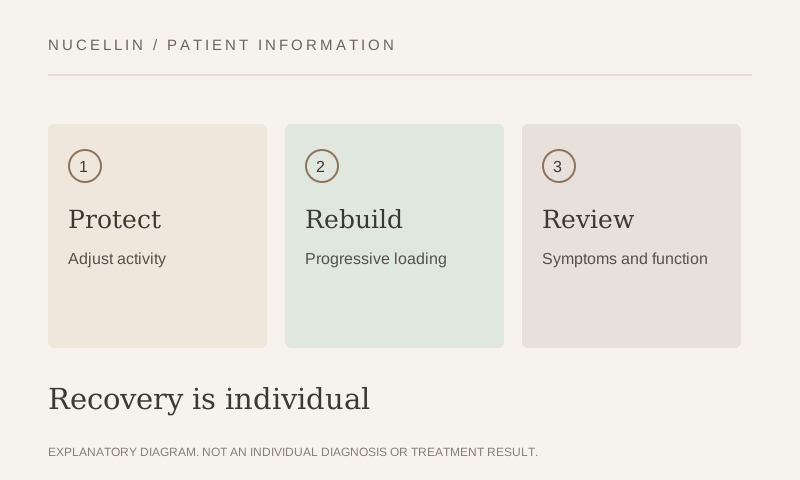
Shockwave therapy does not usually require surgical incisions or a prolonged recovery period.

However, the treated tissue may be temporarily sensitive.

Immediately After Treatment

Patients may experience:

  • Local tenderness
  • Redness
  • A warm sensation
  • Temporary aching
  • Mild swelling
  • Temporary change in pain

Many patients can continue normal light daily activity.

The recommended level of activity depends on the tissue being treated.

The First Several Days

Temporary soreness may continue for several days.

Heavy tendon loading, sprinting, jumping, throwing or repetitive lifting may need to be reduced depending on the condition.

Severe exercise immediately after treatment is not a test of whether the procedure worked.

The tissue still requires appropriately dosed recovery and reloading.

The Following Weeks

Shockwave treatment is not intended to provide the immediate numbing effect of a local anaesthetic injection.

Where improvement occurs, it may develop gradually through:

  • Reduced frequency of flare-ups
  • Improved movement
  • Better tolerance for exercise
  • Improved sleep
  • Increased walking or gripping capacity
  • Ability to progress rehabilitation

Clinical guidelines note that treatment effects may take several weeks to become apparent and commonly recommend reassessment after an appropriate interval rather than immediately after each session.

Rehabilitation After Shockwave Therapy

Shockwave therapy does not replace rehabilitation.

The rehabilitation plan may include:

  • Temporary modification of aggravating load
  • Progressive tendon loading
  • Isometric, concentric or eccentric exercise
  • Range-of-motion work
  • Strength and balance training
  • Movement retraining
  • Correction of repeated occupational or athletic overload
  • Gradual return to sport

The device provides a treatment stimulus.

Rehabilitation determines how the tissue is loaded afterwards.

Skipping the rehabilitation phase may reduce the likelihood of a durable functional improvement.

Can Shockwave Be Combined With Other Treatments?

Depending on the diagnosis, shockwave therapy may be combined with:

  • Activity modification
  • Exercise rehabilitation
  • Manual or soft-tissue treatment
  • High-intensity laser therapy
  • Bracing or temporary protection
  • Medication when appropriate
  • Image-guided injection treatment
  • Activated PRF or cell-based treatment in separately selected cases

More treatments are not automatically better.

Each component should have a clear purpose.

Shockwave therapy should not be added merely because another treatment has not worked without first reconsidering the diagnosis.

Whether Shockwave Therapy May Suit You

You May Be a Reasonable Candidate If

  • You have a chronic tendon or accessible soft-tissue condition
  • Symptoms have continued despite sensible rehabilitation
  • A specific treatment target has been identified
  • Examination and imaging support the diagnosis
  • The condition affects work, exercise or daily function
  • There is no urgent surgical indication
  • You can participate in progressive rehabilitation
  • Your treatment goals are realistic

Shockwave Therapy May Not Be the Right Treatment If

  • There is no clear diagnosis or target
  • The condition is an acute complete tendon rupture
  • There is a displaced fracture
  • There is severe mechanical instability
  • Progressive nerve damage is present
  • There is spinal-cord compression
  • There is an active infection in the treatment region
  • A malignant lesion is present in the treatment field
  • Surgery offers a more predictable result
  • You expect one session to reverse years of degeneration
  • You cannot modify the load that repeatedly aggravates the tissue

The presence of chronic pain alone does not prove that shockwave therapy is appropriate.

The correct treatment may instead be:

  • Temporary protection
  • Rehabilitation
  • Further diagnostic assessment
  • Image-guided injection
  • Activated PRF
  • Cell-based treatment
  • Tendon or ligament repair
  • Joint surgery
  • Management of a nerve or spinal condition

Knowing when not to use shockwave therapy is part of responsible care.

Risks and Limitations

Shockwave therapy is non-invasive, but it is not risk-free.

Potential temporary effects may include:

  • Pain during treatment
  • Post-treatment soreness
  • Redness
  • Swelling
  • Bruising
  • Skin irritation
  • Temporary numbness or tingling
  • Temporary worsening of symptoms

Less common complications may include injury to a tendon or nearby structure, particularly when inappropriate energy is used, the tissue is already severely damaged or activity is resumed too aggressively.

ISMST guidance lists pain, skin redness and bruising among recognised adverse effects and recommends careful attention to tissue condition, energy selection and previous tendon damage.

Treatment Requires Additional Caution or May Not Be Performed When

  • A malignant tumour is located in the treatment field
  • The fetus would be within the treatment field
  • A pacemaker or defibrillator lies within the treatment field
  • High-energy treatment would pass through lung tissue
  • There is a significant coagulation disorder
  • The target is close to the brain, spinal cord or another sensitive structure
  • There is active infection or osteomyelitis in the treatment region
  • The patient has recently sustained an injury that has not been adequately diagnosed
  • A tendon is at high risk of rupture

These considerations depend on the type of device, energy level and body region being treated.

Patients should inform the clinic about:

  • Pregnancy
  • Pacemaker or implanted electronic devices
  • Anticoagulant or antiplatelet medication
  • Bleeding disorders
  • Cancer
  • Infection
  • Recent corticosteroid injections
  • Previous tendon rupture
  • Recent fracture
  • Neurologic symptoms
  • Previous surgery in the treatment region

Medication should not be stopped without consulting the prescribing physician.

A Realistic View of Shockwave Therapy

Shockwave therapy should not be presented as a cure for every painful tendon or muscle.

It cannot reliably create:

  • A completely new tendon
  • A normal ligament after a complete rupture
  • A young and normal joint
  • Full restoration of all lost cartilage
  • Guaranteed permanent pain relief
  • Guaranteed avoidance of surgery

Realistic goals may include:

  • Reducing tissue irritation
  • Improving pain
  • Improving function
  • Supporting tendon rehabilitation
  • Increasing tolerance for work and exercise
  • Treating a clearly identified soft-tissue target
  • Delaying more invasive treatment when medically reasonable

The treatment result depends on:

  • Correct diagnosis
  • Correct target
  • Appropriate device selection
  • Appropriate energy and technique
  • Structural condition of the tissue
  • Rehabilitation
  • Daily load
  • Patient participation

The goal is not to apply energy to every painful region.

The goal is to determine whether a targeted mechanical treatment can help the individual patient regain function.

Questions Patients Ask

Is Shockwave Therapy an Electrical Shock?

No.

The treatment delivers acoustic or mechanical pressure waves through a handheld applicator placed against the skin.

No electrical current is passed through the patient.

Is Focused Shockwave the Same as Radial Shockwave?

No.

Focused shockwave concentrates acoustic energy at a defined target and can reach selected deeper structures.

Radial pressure-wave treatment produces broader mechanical energy that is strongest near the applicator and disperses through more superficial tissues.

Both may be useful, but they are selected for different clinical purposes.

Which Type Is Better?

Neither is universally better.

The choice depends on:

  • Target depth
  • Tissue involved
  • Size of the painful area
  • Presence of calcification
  • Diagnosis
  • Available evidence
  • Patient tolerance

A device should be selected for the target rather than because one name sounds more advanced.

Is Shockwave Therapy Painful?

Patients commonly feel tapping, pressure or aching during treatment.

A sensitive tendon may be uncomfortable when the correct area is reached.

The intensity is adjusted according to the condition and patient tolerance.

Treatment does not need to be maximally painful to be effective.

Does Shockwave Break Up Scar Tissue?

That description is too simple.

Shockwave therapy provides a controlled mechanical stimulus that may influence pain processing and tissue-response signalling.

In calcific shoulder tendinopathy, it may also affect the calcific deposit.

It should not generally be described as physically destroying ordinary tendon or muscle tissue.

Can Shockwave Therapy Remove Calcium From the Shoulder?

Focused shockwave therapy may be considered for selected calcific rotator-cuff tendinopathy.

Some calcific deposits may reduce in size or resorb over time, but complete removal cannot be guaranteed.

The size, density and location of the deposit and the patient’s symptoms should be evaluated first.

Ultrasound-guided lavage or surgery may be more appropriate in some cases.

Can It Treat a Tendon Tear?

Shockwave therapy may be considered for selected chronic tendon disorders and some partial injuries.

It cannot mechanically reattach a completely ruptured or significantly retracted tendon.

A complete tear may require surgical repair.

Can It Treat Arthritis?

Shockwave therapy may be used for certain soft tissues around an arthritic joint.

It does not reliably restore lost cartilage or reverse advanced joint destruction.

When pain primarily arises from the joint itself, other treatments may be more appropriate.

Can It Treat a Herniated Disc or Pinched Nerve?

Shockwave therapy does not remove a herniated disc or decompress a nerve root inside the spinal canal.

It may be considered only when examination identifies a separate accessible muscle, tendon or fascial structure contributing to the symptoms.

Progressive weakness, significant numbness or spinal-cord signs require neurologic evaluation.

How Many Treatments Will I Need?

There is no fixed number for every patient.

Some patients may receive one treatment followed by reassessment. Others may undergo a short treatment series.

The number and interval depend on the diagnosis, device, target tissue and clinical response.

How Soon Will I Feel Better?

Some patients notice an early change, while others improve gradually over several weeks.

Immediate pain relief is not guaranteed and does not determine the final response.

Function and load tolerance may improve before the pain score changes substantially.

Can I Exercise After Treatment?

Light daily activity is often possible.

Heavy or repetitive loading of the treated tendon may need to be reduced temporarily.

The return-to-exercise plan depends on the diagnosis and should be gradual.

Can I Fly After Treatment?

Many patients can fly after uncomplicated peripheral shockwave treatment.

The recommendation depends on:

  • Treatment region
  • Post-treatment soreness
  • Mobility
  • Underlying diagnosis
  • Medical history
  • Length of the flight

Travel plans should be discussed during the consultation.

Is Shockwave Therapy a Regenerative Treatment?

Shockwave therapy is not a stem cell or platelet injection.

It is sometimes described as regenerative mechanotherapy because mechanical energy may influence biological tissue-response pathways.

The term should not be interpreted as a guarantee that new tissue will be created.

Can Shockwave Be Combined With Activated PRF?

The treatments may be used within the same overall treatment plan in selected patients, but they serve different purposes.

Whether they should be combined, separated or not used at all depends on:

  • Diagnosis
  • Tissue condition
  • Timing
  • Irritability
  • Structural damage
  • Rehabilitation plan

A combination should not be recommended automatically.

International Patients

International patients can consult directly with Dr. Kim in English.

You may send or bring:

  • X-rays
  • MRI images
  • Ultrasound images
  • Medical reports
  • Previous treatment records
  • Current medication information

Imaging is reviewed together with your symptoms and physical examination rather than interpreted in isolation.

Nucellin Orthopedic Clinic has both focused shockwave and radial pressure-wave treatment available.

Same-day consultation and shockwave treatment may be possible when medically appropriate.

The recommended device, treatment target, number of sessions, rehabilitation plan and written estimate are discussed before treatment.

Nucellin Orthopedic Clinic does not have an on-site MRI scanner. When MRI is medically appropriate, imaging can be arranged at a nearby radiology centre and reviewed with you.

Information about insurance and payment is available on the Insurance & Payment page.

To arrange an evaluation, please contact the clinic.

Start with an informed medical assessment, not a device.

Chronic tendon pain that has not settled?

Start with an informed medical assessment, not a procedure.

WhatsApp