Shoulder Pain
Assessed and treated in English by the physician who reads your imaging. Pain around the shoulder does not always come from the shoulder itself.
On this page
- Overview
- Symptoms
- Causes
- Diagnosis
- Diagnosis and Imaging
- Understanding Shoulder Pain and Neck-Related Pain
- Treatment Options
- Activity Modification and Rehabilitation
- Medication and Symptom Control
- Ultrasound-Guided Treatment
- PDRN-Based Regenerative Injection Treatment
- Activated PRF Treatment
- Stem Cell-Based Treatment
- Shockwave Therapy
- Regenerative Physical Therapy
- A Realistic View of Regenerative Treatment
- When Surgery May Be Appropriate
- Managing Shoulder Pain Day to Day
- When to See a Doctor
- When to Seek Urgent Medical Care
- International Patients
Overview
Shoulder pain is common among office workers, athletes, weightlifters, travellers and people whose work involves repeated reaching or overhead activity.
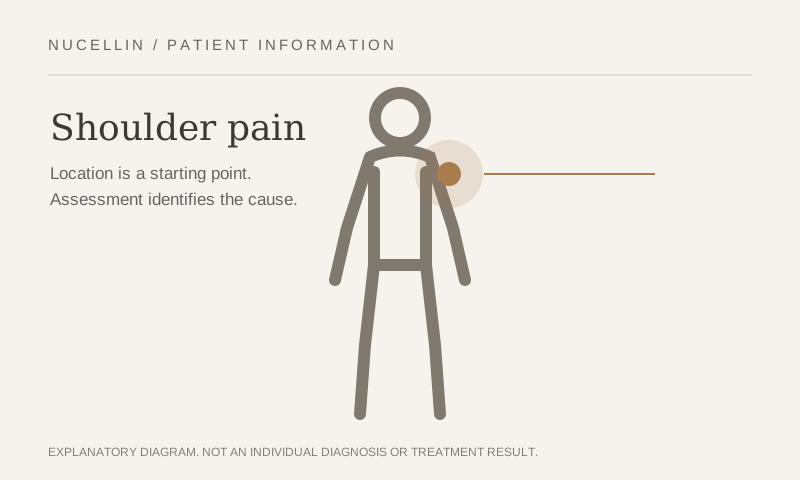
However, pain felt around the shoulder does not always originate from the shoulder joint itself.
Symptoms may arise from the rotator cuff, biceps tendon, joint capsule, labrum, acromioclavicular joint or surrounding muscles. Pain may also be referred from the cervical spine or a peripheral nerve.
At Nucellin Orthopedic Clinic in Hannam-dong, Seoul, Dr. Kim personally evaluates each patient and can conduct the consultation in English.
Diagnosis begins with your symptoms, physical examination, strength, range of motion and daily loading pattern. X-rays, musculoskeletal ultrasound and MRI findings are then interpreted in that clinical context.
The purpose is not simply to identify an abnormality on a scan. It is to determine whether that abnormality explains your pain and loss of function.
This page explains how shoulder pain is assessed, which non-surgical treatments may be considered and when a surgical opinion may be appropriate.
Symptoms
Shoulder disorders can present in different ways. The location, timing and behaviour of the symptoms provide important diagnostic information.
- Pain when raising the arm: may be related to the rotator cuff, subacromial tissues, biceps tendon or altered shoulder-blade movement.
- Pain when reaching behind the back: may occur with joint-capsule restriction, rotator-cuff irritation or reduced shoulder mobility.
- Night pain: is common in rotator-cuff disorders, bursitis, frozen shoulder and arthritis, but is not specific to one diagnosis.
- Weakness when lifting or rotating the arm: may indicate pain inhibition, tendon dysfunction or a rotator-cuff tear.
- Progressive stiffness in several directions: may suggest adhesive capsulitis, commonly called frozen shoulder.
- Clicking, catching or a sense of instability: may occur with labral injury, instability, tendon movement or changes inside the joint.
- Pain at the top of the shoulder: may arise from the acromioclavicular joint.
- Pain extending below the elbow with tingling or numbness: increases the possibility of cervical nerve or peripheral nerve involvement.
- Pain after a fall or sudden lifting injury: may indicate fracture, dislocation, tendon injury or another traumatic lesion.
A painful shoulder and a weak shoulder are not always the same problem.
Strength testing, movement assessment and neurologic examination help determine whether weakness comes from pain, tendon failure, nerve dysfunction or reduced use.
Causes
Common causes of shoulder pain include:
- Rotator-cuff tendinopathy
- Partial- or full-thickness rotator-cuff tears
- Subacromial bursitis
- Long-head biceps tendon disorders
- Adhesive capsulitis
- Calcific tendinopathy
- Acromioclavicular-joint pain
- Glenohumeral osteoarthritis
- Labral injury
- Shoulder instability
- Muscle and soft-tissue overload
- Referred pain from the neck
- Peripheral nerve irritation
- Previous trauma or surgery
In younger patients, instability, sport-related injury, labral problems and sudden tendon overload are more common.
In middle age, rotator-cuff tendinopathy, partial tears, calcific deposits and frozen shoulder become more frequent.
In older adults, larger rotator-cuff tears and degenerative joint changes are increasingly common.
However, the presence of a structural finding does not automatically prove that it is the pain generator.
Rotator-cuff changes can exist without major symptoms. Conversely, severe pain and stiffness can occur without a large tear.
Diagnosis therefore depends on matching the structural findings with the examination.
Diagnosis
Diagnosis begins with a detailed history and hands-on examination.
We consider questions such as:
- Where exactly is the pain?
- Did it begin gradually or after an injury?
- Is the pain worse when raising, lowering or rotating the arm?
- Can the patient reach behind the back?
- Is there night pain?
- Is there weakness or loss of control?
- Does the shoulder feel unstable?
- Is there tingling, numbness or neck pain?
- What does the shoulder have to tolerate during work, sleep, exercise and daily life?
The examination may include:
- Active and passive range-of-motion testing
- Rotator-cuff strength testing
- Shoulder-blade movement assessment
- Biceps and acromioclavicular-joint testing
- Instability and labral assessment
- Palpation of muscles, tendons and joints
- Cervical and neurologic examination
- Evaluation of the movements that reproduce the symptoms
A major distinction is whether both active and passive movement are restricted.
When the patient cannot actively lift the arm but passive movement remains relatively preserved, tendon dysfunction, pain inhibition or neurologic weakness may be considered.
When both active and passive movement are restricted, joint-capsule stiffness, arthritis or frozen shoulder becomes more likely.
Diagnosis and Imaging
X-ray
X-rays may be useful when there is concern about:
- Fracture or previous trauma
- Glenohumeral osteoarthritis
- Acromioclavicular-joint degeneration
- Calcific tendinopathy
- Loss of joint space
- Changes in bone alignment
- Advanced rotator-cuff–related arthropathy
X-rays do not show most tendons, the labrum or many soft-tissue structures in sufficient detail.
Musculoskeletal Ultrasound
Musculoskeletal ultrasound can assess:
- Rotator-cuff tendons
- Long-head biceps tendon
- Subacromial bursa
- Calcific deposits
- Joint fluid
- Dynamic movement of selected structures
- Some partial- and full-thickness tendon tears
Ultrasound also allows the doctor to compare the painful shoulder with the other side and evaluate structures while the arm moves.
It can be used to guide joint aspiration or targeted injections when medically appropriate.
MRI
MRI is not automatically required for every painful shoulder.
It may be recommended when:
- A traumatic rotator-cuff tear is suspected
- Significant weakness persists
- Labral injury or instability is suspected
- Symptoms remain unexplained after examination and initial imaging
- A deeper joint or bone lesion is suspected
- Appropriate non-surgical treatment has not produced sufficient improvement
- Surgery or another targeted intervention is being considered
An MRI finding should be matched with the patient’s age, symptoms, strength, range of motion and functional limitations.
A tear seen on MRI may be important, incidental or only one part of the problem.
The image provides structural information. The examination determines what that information means.
When MRI is medically appropriate, we can arrange imaging at a nearby radiology centre and review the results with you.
What Your Scan Does and Does Not Tell You
A scan can show tendon, cartilage, bone and joint abnormalities.
It cannot directly measure pain, tissue capacity, shoulder-blade control, sleep-related loading or how well the shoulder tolerates work and exercise.
An image is one piece of evidence, not the diagnosis by itself.
Read Dr. Kim’s clinical insights →
Understanding Shoulder Pain and Neck-Related Pain
Shoulder pain may be referred from the cervical spine, especially when symptoms extend below the elbow or are accompanied by tingling, numbness or changes in reflexes.
Pain arising primarily from the shoulder is more likely to change with shoulder movement and specific tendon or joint testing.
Neck-related symptoms may change with cervical movement and follow a nerve-root distribution.
However, the neck and shoulder can be painful at the same time.
The examination may therefore include:
- Cervical range of motion
- Reflex and sensation testing
- Arm and hand strength
- Nerve-tension testing
- Shoulder range of motion and strength
- Palpation of the neck, shoulder and surrounding muscles
Treatment should not be chosen from the shoulder MRI or cervical MRI alone.
Treatment Options
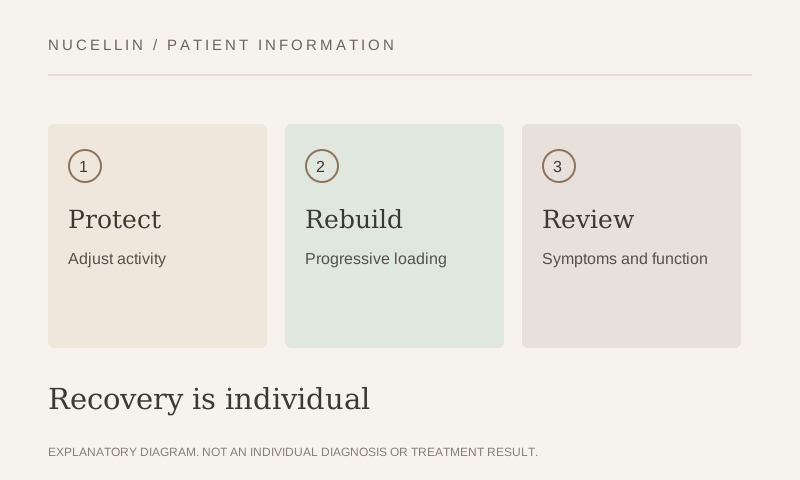
Treatment is introduced step by step and adjusted according to the diagnosis, severity of symptoms and response.
We begin with the least invasive option that can reasonably improve pain and function.
Treatment response is judged by practical changes such as:
- Can the patient raise the arm more comfortably?
- Is sleep less frequently interrupted?
- Is strength improving?
- Can the patient dress and reach behind the back more easily?
- Can the patient return to work or exercise?
- Is the shoulder tolerating more load?
The goal is not simply to reduce pain temporarily.
It is to restore movement, strength, tissue capacity and confidence in daily function.
Activity Modification and Rehabilitation
For most shoulder conditions, appropriately prescribed movement and rehabilitation form the foundation of treatment.
Treatment may include:
- Temporary modification of painful overhead activity
- Restoration of shoulder mobility
- Rotator-cuff strengthening
- Shoulder-blade control exercises
- Thoracic and cervical mobility work
- Gradual return to lifting, swimming, throwing or racket sports
- Advice regarding sleep position
- A structured home exercise programme
Complete rest may reduce symptoms temporarily but can contribute to stiffness and reduced capacity.
However, repeatedly loading a painful tendon without adjusting the dose can also delay recovery.
The appropriate balance depends on the diagnosis.
Forceful stretching may aggravate an acutely irritated shoulder, while prolonged avoidance of movement can worsen stiffness in other conditions.
Read more about physical therapy and rehabilitation
Medication and Symptom Control
Medication may be considered when appropriate to reduce pain and support movement.
The decision depends on:
- The type and severity of symptoms
- Other medical conditions
- Current medications
- Allergy history
- Kidney, stomach, cardiovascular and bleeding risks
Medication can provide symptom relief, but it does not replace diagnosis, load modification or rehabilitation.
Ultrasound-Guided Treatment
Selected patients may benefit from a targeted ultrasound-guided procedure when the examination identifies a plausible pain-generating structure.
Depending on the diagnosis, treatment may be directed toward:
- Glenohumeral joint
- Acromioclavicular joint
- Subacromial bursa
- Long-head biceps tendon sheath
- Rotator-cuff–related soft tissues
- Selected peripheral nerves
- Painful muscles or fascial planes
Ultrasound guidance allows accurate placement while avoiding nearby nerves, blood vessels and other structures.
A procedure should not be performed merely because a scan shows degeneration.
The proposed target should match the patient’s symptoms and examination findings.
PDRN-Based Regenerative Injection Treatment
PDRN-based treatment may be considered for selected patients when the suspected pain generator involves an irritated tendon, joint-related structure, periarticular tissue or peripheral neural structure.
The purpose is to support symptom control and tissue recovery without relying on corticosteroid treatment.
PDRN is not a universal treatment for shoulder pain.
It cannot repair a fully retracted tendon, restore severe joint destruction or correct mechanical instability.
Suitability is determined after clinical examination and imaging review.
Activated PRF Treatment
Activated platelet-rich fibrin may be considered for carefully selected patients with:
- Chronic rotator-cuff tendinopathy
- Selected partial-thickness tendon injuries
- Long-head biceps tendon disorders
- Joint-related pain
- Selected ligament or soft-tissue conditions
Activated PRF is prepared from the patient’s own blood and is intended to support a sustained biologic environment around the treated tissue.
It should not be presented as a guaranteed way to close a tendon tear or restore a normal joint.
Activated PRF cannot guarantee:
- Complete tendon healing
- Permanent pain relief
- Restoration of all lost cartilage
- Prevention of future tear progression
- Avoidance of surgery
Suitability depends on:
- The location and extent of the lesion
- Tendon quality
- Strength and function
- Imaging findings
- Previous treatment
- Age and general health
- Activity goals
- Realistic expectations
Read more about activated PRF treatment
Stem Cell-Based Treatment
Autologous bone marrow- or adipose-derived cell-based treatment may be considered for carefully selected patients with chronic degenerative shoulder conditions.
Potential candidates may include selected patients with:
- Symptomatic glenohumeral joint degeneration
- Chronic tendon degeneration
- Persistent pain despite appropriate non-surgical treatment
- A clearly identified treatment target
- Realistic functional goals
Stem cell-based treatment is not a routine first-line treatment for general shoulder pain.
It is not appropriate as a substitute for necessary surgical repair when there is:
- An acute traumatic tendon rupture with major weakness
- A large retracted rotator-cuff tear
- Recurrent dislocation requiring stabilization
- Fracture
- Infection
- Tumour
- Severe joint destruction requiring replacement
- Progressive neurologic loss
Current evidence for cell-based treatment in shoulder disorders remains limited and varies according to the diagnosis and preparation used.
Stem cell-based treatment cannot guarantee:
- Regeneration of a normal rotator cuff
- Closure of a large tendon defect
- Restoration of a young and normal joint
- Permanent pain relief
- Prevention of future surgery
The realistic goals may include:
- Supporting a more favourable biologic environment
- Reducing inflammatory overload
- Improving pain and function
- Supporting rehabilitation
- Increasing tolerance for daily and athletic activity
- Delaying more invasive treatment when medically reasonable
The potential benefits, limitations, rehabilitation plan and alternative treatments are discussed before any procedure.
Read more about stem cell-based treatment
Shockwave Therapy
Shockwave therapy may be considered when examination suggests a chronic accessible tendon or soft-tissue pain source.
Potential indications may include:
- Calcific rotator-cuff tendinopathy
- Chronic rotator-cuff tendon pain
- Selected biceps or surrounding soft-tissue disorders
- Chronic muscular overload around the shoulder girdle
Focused shockwave may be directed toward a specific tendon or calcific target.
Radial shockwave may be used across a broader overloaded muscle chain around the shoulder blade, upper back and arm.
Shockwave is not used to repair a complete tendon rupture or treat nerve compression inside the cervical spine.
Read more about shockwave therapy
Regenerative Physical Therapy
Regenerative physical therapy may combine:
- Clinical assessment
- Movement retraining
- Targeted strengthening
- Manual treatment
- Shockwave therapy
- High-intensity laser therapy
- Soft-tissue treatment
- Gradual functional retraining
The purpose is to improve shoulder movement and tissue capacity rather than relying on an injection alone.
A procedure is only one part of recovery.
A Realistic View of Regenerative Treatment
Regenerative treatment does not replace an accurate diagnosis.
No injection or cell-based treatment can guarantee that a torn tendon will become completely normal or that an arthritic shoulder will become a young joint again.
Realistic goals may include:
- Reducing tissue irritation
- Improving pain and movement
- Supporting tendon rehabilitation
- Increasing tolerance for work, sleep and exercise
- Treating a carefully identified joint or soft-tissue target
- Delaying more invasive treatment when medically reasonable
The outcome depends heavily on selecting the correct patient and treatment target.
When Surgery May Be Appropriate
A surgical opinion may be appropriate when there is:
- An acute traumatic rotator-cuff tear with significant weakness
- A large or retracted tendon tear
- Recurrent shoulder dislocation
- A fracture or major traumatic injury
- A mechanically significant labral injury
- Severe joint degeneration
- Infection
- Persistent pain and functional loss despite appropriate non-surgical treatment
The goal is not to avoid surgery at all costs.
It is to determine whether surgery is necessary and whether the timing is appropriate.
Managing Shoulder Pain Day to Day
- Temporarily reduce repeatedly painful overhead activity.
- Avoid sleeping directly on the painful shoulder when this aggravates symptoms.
- Support the arm with a pillow if it reduces night pain.
- Maintain comfortable movement rather than completely immobilising the shoulder.
- Increase lifting gradually.
- Avoid repeatedly testing a painful movement throughout the day.
- Build rotator-cuff and shoulder-blade strength progressively.
- Monitor true weakness rather than pain alone.
A temporary flare does not always mean that a new tear has occurred.
It may indicate that the current load exceeded the shoulder’s present capacity.
When to See a Doctor
Arrange an assessment if shoulder pain:
- Continues for more than a few weeks
- Repeatedly returns
- Causes night pain
- Produces weakness
- Limits overhead movement
- Prevents dressing or reaching behind the back
- Began after an injury
- Is associated with tingling or numbness
- Has not improved with sensible activity modification
When to Seek Urgent Medical Care
Seek urgent medical attention if there is:
- Obvious deformity after trauma
- Inability to move the arm after a significant injury
- Sudden major weakness after a lifting or falling injury
- A hot, red and swollen joint with fever
- A cold, pale or numb arm
- Rapidly progressive arm weakness
- Chest pain, shortness of breath or sweating with shoulder pain
International Patients
International patients can consult directly with Dr. Kim in English.
You may bring or send previous X-rays, ultrasound images, MRI images and medical reports.
Imaging is reviewed together with your symptoms and examination rather than interpreted in isolation.
Nucellin Orthopedic Clinic does not have an on-site MRI scanner. When MRI is medically appropriate, we can arrange imaging at a nearby radiology centre and review the results with you.
Same-day consultation and selected treatments may be possible when medically appropriate.
Bone marrow- or adipose-derived procedures generally require separate planning.
A written estimate is provided before treatment.
Information about insurance and payment is available on the Insurance & Payment page.
If you already have imaging, you may contact the clinic to arrange an evaluation.
Start with an informed medical assessment, not a procedure.
Shoulder not settling?
Send your scan and get a second opinion from the doctor, in English.