Persistent joint or tendon pain can make everyday activity difficult. At Nucellin Orthopedic Clinic, we assess your symptoms, movement and imaging together before considering whether a cell-based procedure has a reasonable role in your care.
Dr. Heejun Kim, a board-certified orthopedic specialist in South Korea, personally evaluates each patient. Consultations are available in English. Treatment planning considers your diagnosis, previous care, functional goals and the evidence for the specific preparation being proposed.
The aim is meaningful improvement in pain and function, with clear expectations about what treatment may and may not achieve.
Understanding Cell-Based Treatment
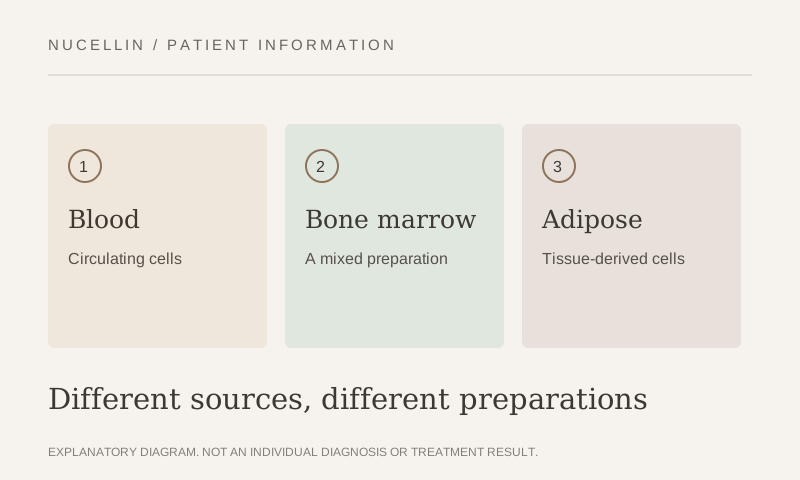
“Stem cell therapy” is often used as an umbrella term for different procedures. In practice, a preparation obtained from blood, bone marrow or fat tissue may contain a mixture of cells and other components rather than a purified population of stem cells.
Autologous means that the material comes from your own body. It does not establish which cells are present, how effective the treatment is or whether it is suitable for your condition.
Before a procedure, we explain the source, collection and processing method, intended treatment site and evidence relevant to the proposed use. The specific preparation matters more than its general label.
This page focuses on assessment for local musculoskeletal treatment. Evidence for a local injection should not be assumed to apply to intravenous administration or other uses.
Blood, Bone Marrow and Adipose Sources
Peripheral Blood
Blood-derived preparations are collected from a peripheral vein and processed according to the selected protocol. Depending on the method, they may contain different circulating cell populations.
A routine blood-derived preparation should not be assumed to provide a clinically meaningful stem-cell dose. Peripheral blood mononuclear-cell preparations, mobilised blood-cell collections and other blood products are different procedures; research on one cannot automatically support another.
Collection may be less invasive than bone marrow or fat harvesting, but this does not establish equivalent effectiveness. Evidence for many musculoskeletal uses remains limited.
Blood-derived cellular preparations also differ from Activated PRF, which is primarily a platelet-and-fibrin preparation.
Bone Marrow
Bone marrow is obtained through an aspiration procedure under sterile conditions and appropriate anaesthesia. It contains a mixture of blood-forming cells, immune cells, platelets and small populations of stromal progenitor cells.
Bone marrow aspirate concentrate, often called BMAC, is a mixed preparation rather than a purified stem-cell product. Its composition depends on collection technique, processing and patient factors.
If bone marrow treatment is considered, we discuss the intended target, relevant evidence, collection-site discomfort and alternatives. Bone marrow collection adds a separate procedure and recovery consideration to the treatment plan.
Adipose Tissue
Adipose-derived preparations are obtained through a planned fat-harvesting procedure. Fat tissue contains several cell populations, including vascular, immune and stromal cells.
Processed adipose tissue, stromal vascular fraction and laboratory-expanded cells are different preparations. Their composition, evidence and requirements should not be treated as interchangeable.
For any proposed adipose-derived treatment, we explain the actual preparation, harvesting method and intended use. Suitability depends on your health, the treatment target and the balance of potential benefit against harvesting and injection risks.
No source is universally best. A more invasive collection method or a higher reported total cell count does not, by itself, establish a better clinical outcome.
Potential Benefits and Clinical Evidence
Cell-based approaches are being investigated for their interactions with inflammatory signalling and the local tissue environment. These proposed mechanisms do not demonstrate that injected cells will rebuild damaged cartilage or create a new joint.
Clinical research includes knee osteoarthritis and other musculoskeletal conditions, but findings vary. Some studies report improvements in pain or function, while others do not show a clear advantage over comparison treatments. The evidence for one cell product, dose or delivery method cannot automatically be applied to another.
For many orthopedic uses, important uncertainty remains about the size and duration of benefit, the most suitable patients and long-term outcomes. Treatment should therefore be considered in relation to the specific preparation and diagnosis, alongside established alternatives.
Practical goals may include less pain, easier movement and improved tolerance for daily activity. Symptom improvement does not necessarily indicate structural regeneration. Reliable restoration of all lost cartilage or avoidance of future surgery should not be expected.
Function Matters Alongside Imaging
Two patients with similar scans can have very different symptoms and abilities. Joint alignment, stability, muscle capacity, protective guarding and daily load all influence function.
Imaging helps assess structure and may show inflammation, but it does not fully describe how much activity you can tolerate. We use examination and functional assessment alongside imaging to guide treatment and rehabilitation.
Read about Nucellin's approach to regenerative medicine
Who May Be Considered
An individual discussion may be appropriate when pain and functional limitation persist despite suitable initial care and examination identifies a plausible treatment target. Assessment does not mean that a cell-based procedure will be recommended.
| Reason for assessment | What we consider |
|---|---|
| Knee osteoarthritis | Symptoms, daily function, alignment, stability, previous treatment and whether surgery is likely to provide a more predictable result. |
| Hip, ankle or other joint degeneration | The specific diagnosis and preparation, with separate consideration of the more limited evidence for many non-knee applications. |
| Selected tendon or ligament problems | The extent of injury, response to rehabilitation and whether repair or stabilisation is required. |
| Focal cartilage injury | The size, location and stability of the lesion and whether a surgical cartilage procedure is more appropriate. |
These are reasons to seek an orthopedic assessment, not established indications for every cell-based product. Spinal or nerve-related symptoms require separate evaluation and should not be presented as routine indications for cell injections.
Active infection, a displaced fracture, a tendon rupture requiring repair, severe instability or progressive neurological symptoms may require a different treatment priority. Advanced joint destruction may be more predictably managed with joint replacement.
- More information about knee assessment
Your Treatment Journey
1. Consultation and Examination
Dr. Kim reviews your symptoms, medical history, medications, previous treatment and activity goals. Examination may include range of motion, strength, stability and neurological assessment, together with review of available imaging.
2. A Clear Treatment Decision
We discuss whether a cell-based procedure has a reasonable role, what preparation would be used and what alternatives are available. The decision includes the relevant evidence, uncertainties, collection risks and recovery requirements.
3. Collection and Preparation
Collection depends on the proposed source: a blood draw, bone marrow aspiration or adipose harvesting. Preparation methods differ and are explained before treatment. The proposed procedure and its availability depend on the specific product, intended use and applicable requirements in South Korea.
4. Targeted Delivery
For local treatment, ultrasound or fluoroscopic guidance may be used depending on the target. Imaging helps guide placement and identify nearby structures; it does not eliminate risk or guarantee a clinical benefit.
5. Rehabilitation and Reassessment
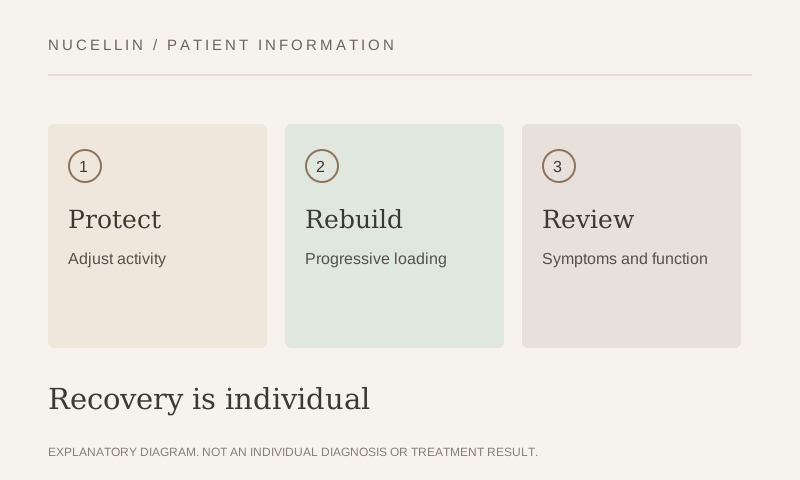
Your recovery plan addresses the treated area as well as the demands placed on it. It may include temporary protection, movement work, progressive strengthening and adjustments to daily activity. Follow-up assesses both symptoms and function.
Recovery and Follow-Up
Recovery varies with the collection method, treatment location, baseline condition and rehabilitation plan. There is no single schedule for all cell-based procedures.
During the first few days, soreness, bruising, swelling or temporary stiffness may occur at the injection or collection site. Bone marrow and adipose harvesting require separate aftercare instructions.
Activity is then progressed according to the diagnosis and clinical response. Where benefit occurs, it may develop over weeks or months. Persistent or worsening symptoms should be reassessed rather than assumed to be part of normal recovery.
Follow-up may review pain, walking or exercise tolerance, range of motion, strength and collection-site healing. Repeat imaging is used when it is likely to change management. Further procedures are considered only after reviewing the response and continuing rationale for treatment.
Risks and Precautions
Using your own tissue does not make treatment risk-free. Depending on the procedure, risks may include pain, bruising, bleeding, swelling, infection, injury to nearby structures and anaesthesia-related complications. Harvesting introduces additional collection-site risks. Meaningful improvement may not occur, and further treatment or surgery may still be needed.
Tell us about active infection, blood disorders, bleeding problems, allergies and all medications or supplements you take. Do not stop prescribed anticoagulants or antiplatelet medicines without advice from the prescribing clinician.
Seek prompt medical advice after treatment for fever, increasing redness or warmth, rapidly worsening swelling, severe escalating pain, or new weakness or numbness.
Frequently Asked Questions
Is Every Treatment Called “Stem Cell Therapy” the Same?
No. Blood, bone marrow and adipose preparations differ. Processing, cell composition and route of administration also matter. Ask about the exact procedure and evidence for your condition.
Can It Replace Lost Cartilage?
Reliable restoration of all lost cartilage has not been established for these injections. Any improvement should be assessed through symptoms and function without assuming that a joint has structurally regenerated.
Is It Better Than Activated PRF?
There is no universal ranking. Activated PRF and cell-based procedures have different compositions and collection methods. A more complex procedure is not automatically more suitable or effective.
Can It Prevent Joint Replacement?
Avoidance of surgery cannot be promised. When joint replacement is likely to provide a safer or more predictable result, we discuss that option rather than allowing injections to delay necessary care.
Do I Need an MRI Before Visiting?
Not necessarily. Bring existing images and reports if available. Further imaging is recommended when it is likely to change the plan. Nucellin does not have an on-site MRI scanner; when needed, imaging can be arranged at a nearby radiology centre.
How Long Should I Stay in Seoul?
The recommended stay depends on the procedure, collection method, mobility and need for review. Contact us before finalising travel arrangements. Final treatment suitability is determined through clinical assessment.
International Patients
English consultations are available directly with Dr. Heejun Kim. Before your visit, you may send your main symptoms, their duration, previous treatment, current medications and any available images or medical reports.
We can discuss assessment needs and a provisional schedule in advance. Bone marrow and adipose procedures require additional planning for harvesting, aftercare and travel.
Before treatment, we review the proposed procedure, recovery plan and follow-up arrangements. Remote follow-up may be used when appropriate, but new or concerning symptoms may require an in-person assessment where you are staying.
International Patient Information
Start with a clear diagnosis and an individual treatment plan.
Contact Nucellin Orthopedic Clinic
This page provides general patient information and does not replace an individual medical assessment.
Discuss your next step
Bring your questions and any existing medical records to your consultation.
Contact the clinic