Neck Pain at Nucellin Orthopedic Clinic in Seoul

Neck Pain

Assessed and treated in English by the physician who reads your imaging. Most neck pain improves without surgery.

Medically reviewed by Dr. Kim Hee-Jun, board-certified orthopedic specialist, Nucellin Orthopedic Clinic, Seoul. Last reviewed 30 August 2026. This page is written for patients and is not a substitute for examination.

Overview

Neck pain is common among desk workers, frequent travellers, athletes and people who spend long hours using computers or mobile devices.

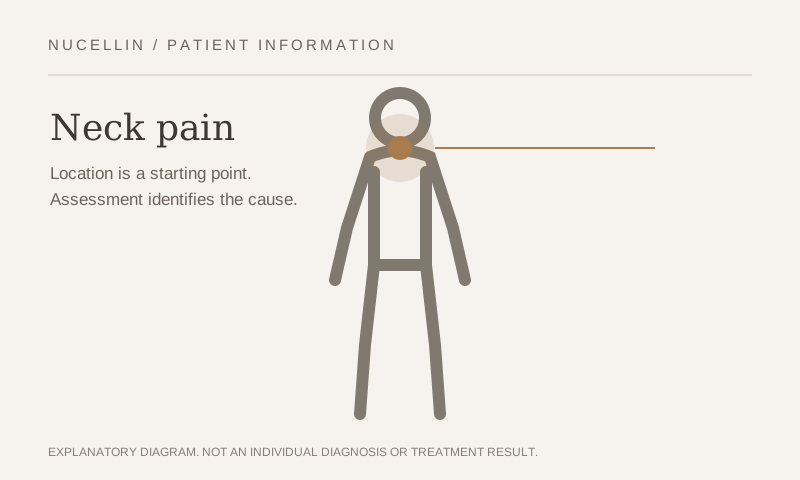
One of the most important things to understand is that the location of pain does not always identify the structure generating it.

This is particularly relevant when neck pain extends into the shoulder, shoulder blade or arm. Sometimes the symptoms are caused by irritation or compression of a cervical nerve root. In other cases, they may be referred from muscles, joints, tendons or other soft tissues around the neck and shoulder girdle. More than one source may also be present at the same time.

At Nucellin Orthopedic Clinic in Hannam-dong, Seoul, Dr. Kim personally evaluates each patient and can conduct the consultation in English. Diagnosis begins with the history, physical examination and neurologic assessment. X-rays and MRI findings are then interpreted in that clinical context.

The purpose of the assessment is not simply to find an abnormality on a scan. It is to determine whether that finding actually explains the patient’s symptoms.

This page explains how neck pain is evaluated, which non-surgical treatments may be considered and when urgent or surgical assessment may be necessary.

Symptoms

Neck conditions can cause symptoms beyond the neck itself. The location, timing and behaviour of the symptoms provide important diagnostic information.

  • Neck stiffness or difficulty turning the head: may occur after prolonged screen use, sleep, travel, injury or sustained muscular loading.
  • Aching or burning across the upper shoulders: may be associated with overload of the upper trapezius and surrounding shoulder-girdle muscles.
  • Pain between the shoulder blades: may arise from the cervical spine, thoracic region, facet joints or overloaded muscles around the shoulder blades.
  • Headache beginning near the base of the skull: may be associated with cervical joints, upper cervical muscles or occipital nerve irritation.
  • Pain extending into the shoulder or arm: may result from a cervical nerve root, but can also be referred from muscles, joints or shoulder structures.
  • Tingling or numbness in the arm or hand: increases the possibility of nerve involvement and requires a neurologic examination.
  • Arm or hand weakness: may indicate significant nerve-root or spinal-cord involvement and should be assessed promptly.
  • Hand clumsiness, balance difficulty or an unsteady gait: may indicate cervical spinal-cord compression and requires urgent medical evaluation.

Arm symptoms do not automatically mean that a nerve is compressed. However, they should not be assumed to be muscular without an appropriate neurologic examination.

Good neck care begins by keeping both possibilities open until the clinical findings identify the most likely source.

Causes

Common causes of neck pain include:

  • Muscular and soft-tissue overload
  • Cervical facet-joint irritation
  • Disc irritation or cervical disc herniation
  • Cervical nerve-root irritation
  • Age-related disc and joint degeneration
  • Whiplash and other traumatic injuries
  • Shoulder-girdle dysfunction
  • Repeated occupational or athletic loading
  • Prolonged static positioning
  • Previous cervical injury or surgery

Desk work, mobile-device use and sleep position may contribute to symptoms, but there is rarely one universally correct posture that prevents neck pain.

The more important issue is often how long the neck remains in one position, how frequently the position changes and whether the surrounding muscles have enough capacity for the demands placed on them.

Not all pain felt in the neck, shoulder or arm originates from the cervical spine.

Muscles around the shoulder blade, upper trapezius, rotator cuff, upper arm and chest can refer pain into the neck or arm. Shoulder disorders and peripheral nerve problems can also produce symptoms that resemble cervical radiculopathy.

At the same time, reproducing pain by pressing on a muscle does not automatically exclude a cervical nerve problem. Muscular overload and nerve-root irritation can coexist.

The diagnosis therefore depends on the entire pattern rather than one scan finding or one tender point.

Diagnosis

Diagnosis begins with a detailed history and hands-on examination.

We consider questions such as:

  • Where did the symptoms begin?
  • Does the pain remain in the neck or extend into the shoulder, arm or hand?
  • Which fingers are affected by tingling or numbness?
  • Is there weakness, clumsiness or loss of grip strength?
  • Are the symptoms worse with neck movement, arm movement or prolonged positioning?
  • Do coughing or straining increase the arm symptoms?
  • Are there headaches, dizziness, balance changes or visual symptoms?
  • Was there a recent accident, fall or other trauma?
  • What does the neck have to tolerate during work, sleep, travel and exercise?

The physical examination may include:

  • Cervical range-of-motion testing
  • Palpation of the neck and surrounding soft tissues
  • Shoulder and shoulder-blade assessment
  • Muscle-strength testing
  • Sensory and reflex examination
  • Nerve-tension and nerve-root provocation testing
  • Hand coordination and dexterity assessment
  • Walking and balance assessment
  • Evaluation of movements and positions that reproduce the symptoms

The purpose is to distinguish among mechanical neck pain, referred soft-tissue pain, shoulder-related pain, cervical radiculopathy and possible cervical myelopathy.

Diagnosis and Imaging

X-ray

X-rays may be useful when there is concern about:

  • Significant trauma
  • Fracture
  • Spinal alignment
  • Advanced degenerative change
  • Instability
  • Previous cervical surgery
  • Other structural abnormalities

X-rays do not show the spinal cord, nerve roots, discs or most soft tissues in sufficient detail.

MRI

MRI is not automatically required for every episode of neck pain.

It may be recommended when there is:

  • Persistent or progressive arm pain
  • Significant numbness or weakness
  • Abnormal reflexes
  • Suspected cervical radiculopathy
  • Hand clumsiness or gait disturbance
  • Concern about spinal-cord compression
  • Concern about infection, tumour or another serious condition
  • Persistent symptoms despite appropriate non-surgical treatment
  • A need to plan surgery or another targeted intervention

Degenerative disc changes, disc bulges and other age-related findings are common in people who have no neck pain or neurologic symptoms. Their frequency generally increases with age.

An abnormal MRI finding must therefore be matched with the patient’s pain distribution, neurologic findings and functional limitations.

The important questions are not only:

“What does the MRI show?”

but also:

“Does this finding explain the patient’s symptoms?”

An MRI finding that matches the affected nerve distribution, strength loss, sensory changes and reflex findings may be clinically important.

An abnormality that does not match the clinical pattern may be incidental.

The image provides structural evidence. The examination determines what that evidence means.

When MRI is medically appropriate, we can arrange imaging at a nearby radiology centre and review the results with you.

Musculoskeletal Ultrasound

Ultrasound does not replace MRI for evaluating the spinal cord, cervical discs or nerve roots inside the spinal canal.

However, it may help evaluate selected muscles, tendons, joints, peripheral nerves and soft tissues around the neck and shoulder girdle.

It can also be used to guide selected injections when the suspected target is visible and safely accessible with ultrasound.

What Your Scan Does and Does Not Tell You

A scan can show structural anatomy and degeneration.

It cannot directly measure pain, muscle capacity, nervous-system sensitivity, sleep-related loading or how well the neck tolerates daily activity.

An image is one piece of evidence, not the diagnosis by itself.

Read Dr. Kim’s clinical insights →

Understanding Arm Pain and Tingling

Pain, tingling or numbness extending into the arm may indicate cervical radiculopathy, but other conditions can produce a similar pattern.

Cervical radiculopathy occurs when a cervical nerve root becomes irritated or compressed. Findings may include:

  • Pain following a recognisable nerve-root distribution
  • Tingling or numbness in part of the arm or hand
  • Weakness in a corresponding muscle group
  • Altered reflexes
  • Symptoms reproduced by specific cervical or nerve-tension tests

Arm symptoms may also arise from:

  • Shoulder-joint or rotator-cuff disorders
  • Upper trapezius and shoulder-blade muscles
  • Myofascial trigger points
  • Peripheral nerve entrapment
  • Thoracic outlet-region problems
  • Elbow or wrist conditions

The neck, shoulder and peripheral nerves should therefore be assessed together when the symptoms overlap.

Treatment Options

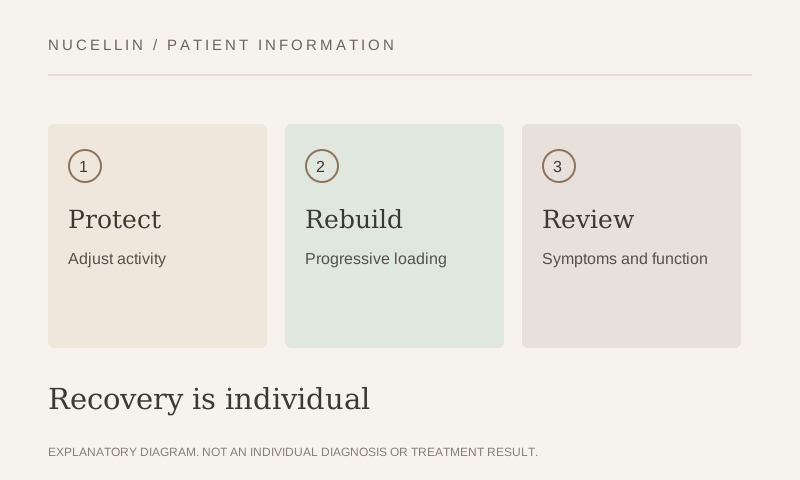
Treatment is introduced step by step and adjusted according to the diagnosis, neurologic findings and response.

We begin with the least invasive option that can reasonably improve symptoms and function. The timing of reassessment depends on the condition and treatment used.

Treatment response is evaluated through practical changes such as:

  • Can the patient turn the head more comfortably?
  • Can the patient work or use a computer for longer?
  • Is sleep less frequently interrupted?
  • Is arm pain becoming less frequent?
  • Are tingling and numbness improving?
  • Is strength stable or recovering?
  • Is the neck tolerating more daily activity?

The goal is not simply to reduce pain temporarily. It is to improve movement, tissue capacity and confidence in daily function while monitoring neurologic recovery when a nerve is involved.

Activity Modification and Rehabilitation

For most patients, rehabilitation and appropriate movement form the foundation of treatment.

Treatment may include:

  • Temporary modification of aggravating activities
  • Cervical and thoracic mobility exercises
  • Deep neck-flexor and shoulder-girdle strengthening
  • Shoulder-blade control exercises
  • Gradual return to work, sport and training
  • Advice regarding sleep position and workstation setup
  • A structured home exercise programme

Treatment should not consist of passive stretching alone.

However, patients with increasing arm symptoms, weakness, spinal-cord signs or recent significant trauma should be assessed before beginning forceful manipulation or aggressive exercise.

Read more about physical therapy and rehabilitation

Medication and Symptom Control

Medication may be considered when appropriate to reduce pain and help the patient remain active.

The choice depends on:

  • The type and severity of symptoms
  • Other medical conditions
  • Current medications
  • Allergy history
  • Kidney, stomach, cardiovascular and bleeding risks

Medication may provide short-term symptom control, but it does not replace examination, movement modification or rehabilitation.

Targeted Image-Guided Treatment

Selected patients may benefit from a targeted procedure when the history, examination and imaging identify a plausible pain-generating structure.

Depending on the diagnosis, treatment may be directed toward:

  • Facet-joint-related structures
  • Medial branch nerves
  • Selected peripheral nerves
  • Painful muscles or fascial planes
  • Tendons and soft tissues around the shoulder girdle

Ultrasound or fluoroscopic guidance may be used depending on the target and procedure.

A procedure should not be performed merely because an MRI shows degeneration. The proposed target must reasonably match the patient’s symptoms and examination.

The expected benefits, uncertainties and potential risks are discussed before treatment.

PDRN-Based Regenerative Injection Treatment

PDRN-based treatment may be considered for selected patients when the suspected pain generator involves an irritated soft tissue, periarticular structure or peripheral neural structure.

The purpose is to support symptom control and tissue recovery without relying on corticosteroid treatment.

PDRN is not a universal treatment for neck pain and cannot correct significant spinal-cord compression, progressive nerve damage or severe mechanical instability.

Suitability is determined after clinical and neurologic examination.

Activated PRF Treatment

Activated platelet-rich fibrin may be considered in carefully selected patients with chronic pain involving an identified cervical joint-related or surrounding soft-tissue target.

Activated PRF is prepared from the patient’s own blood and is intended to support a sustained biologic environment around the treated area.

It should not be presented as a routine cure for cervical disc degeneration, spinal-cord compression or cervical radiculopathy.

Evidence for regenerative injections in the cervical spine remains less established than evidence for many peripheral tendon and joint conditions.

Activated PRF cannot guarantee disc regeneration, permanent pain relief or avoidance of surgery.

The decision to use it depends on:

  • The suspected pain generator
  • Neurologic findings
  • Imaging results
  • Previous treatment
  • General health
  • Functional goals
  • A realistic discussion of potential benefits and limitations

Read more about activated PRF treatment

Stem Cell-Based Treatment

Autologous bone marrow- or adipose-derived cell-based treatment may be considered for carefully selected patients with chronic degenerative musculoskeletal pain.

It is generally considered only after the history, physical examination, neurologic assessment and imaging have identified a plausible treatment target, and when appropriate conservative treatment has not provided sufficient improvement.

In the cervical spine, stem cell-based treatment is not a routine first-line treatment for non-specific neck pain, cervical disc degeneration or cervical radiculopathy.

It is not appropriate when symptoms are caused by:

  • Progressive nerve damage
  • Cervical spinal-cord compression
  • Significant mechanical instability
  • Fracture
  • Infection
  • Tumour
  • Another condition requiring urgent or surgical treatment

Current clinical evidence for cell-based treatment in degenerative spinal conditions remains limited. Some studies report improvement in pain and function, but reliable regeneration of a damaged cervical disc has not been established.

Stem cell-based treatment cannot guarantee:

  • Regeneration of a cervical disc
  • Permanent pain relief
  • Reversal of spinal-cord or nerve compression
  • Prevention of future surgery
  • Restoration of a young and normal spine

Suitability depends on:

  • The suspected pain generator
  • Neurologic findings
  • Imaging results
  • The stage and location of degeneration
  • Previous treatment
  • General health
  • Functional goals
  • Realistic expectations regarding the available evidence

The potential benefits, limitations, rehabilitation plan and alternative treatments are discussed before any procedure.

Read more about stem cell-based treatment

Shockwave Therapy

Shockwave therapy is not used to treat the spinal cord, cervical discs or nerve roots inside the spinal canal.

It may be considered when examination suggests that an important part of the pain is arising from chronic soft-tissue overload around the upper trapezius, shoulder blade, upper back or shoulder girdle.

Focused shockwave may be directed toward a specific soft-tissue target, while radial shockwave may be used across a broader overloaded muscle chain.

Shockwave therapy should not be used as a substitute for neurologic evaluation when arm weakness, progressive numbness or spinal-cord signs are present.

The evidence for shockwave treatment is more established for selected peripheral tendon disorders than for non-specific neck pain. Its use around the neck should therefore be based on a clearly identified accessible soft-tissue target and realistic expectations.

Read more about shockwave therapy

Regenerative Physical Therapy

Regenerative physical therapy may combine clinical assessment, movement retraining and device-based treatment.

Depending on the diagnosis, treatment may include:

  • Targeted rehabilitation
  • Shockwave therapy
  • High-intensity laser therapy
  • Soft-tissue treatment
  • Postural and load-management education
  • Gradual functional retraining

The purpose is not to force the neck into an ideal posture. It is to improve movement options, muscle capacity and tolerance for daily activity.

A Realistic View of Regenerative Treatment

Regenerative treatment does not replace an accurate diagnosis.

No injection or cell-based procedure can reliably restore every degenerative cervical disc to a young and normal state. These treatments cannot reverse significant spinal-cord compression or guarantee that surgery will never be required.

Realistic goals may include:

  • Reducing local tissue irritation
  • Improving pain and movement
  • Supporting rehabilitation
  • Increasing tolerance for work and sleep positions
  • Treating a carefully identified joint or soft-tissue pain source
  • Delaying more invasive treatment when medically reasonable

The outcome depends heavily on choosing the correct target.

A technically successful procedure performed on the wrong structure remains the wrong treatment.

When Surgery May Be Appropriate

Non-surgical treatment is not always the safest or most effective choice.

A surgical opinion may be appropriate when there is:

  • Progressive arm or hand weakness
  • Significant or worsening neurologic loss
  • Cervical myelopathy
  • Spinal-cord compression with hand clumsiness, gait disturbance or balance impairment
  • Severe nerve-root compression with persistent disabling symptoms
  • Major cervical instability
  • Fracture
  • Infection
  • Tumour
  • Persistent pain and functional loss despite appropriate non-surgical treatment

Pain intensity alone does not usually determine whether surgery is necessary.

The decision should be based on the diagnosis, neurologic findings, imaging and effect on function.

When the indication is correct, surgery can be the most appropriate and effective treatment.

The goal is not to avoid surgery at all costs. It is to ensure that the indication and timing are appropriate.

Managing Neck Pain Day to Day

Neck symptoms are often influenced by the total amount of static loading accumulated throughout the day.

  • Change position regularly. There is no need to maintain one rigid “perfect” posture all day.
  • Break up prolonged screen time. Short, frequent movement breaks may be more useful than one long stretching session.
  • Adjust the screen and chair. Position frequently used screens so that the neck does not remain bent or rotated for prolonged periods.
  • Support the arms when possible. Unsupported arms can increase demand on the neck and upper trapezius.
  • Review sleep position. Avoid keeping an arm forcefully overhead or trapped beneath the body if this reproduces symptoms.
  • Choose a suitable pillow. The pillow should support the head without forcing the neck into excessive bending or rotation.
  • Build shoulder-girdle capacity. Rowing movements, controlled band exercises and deep neck-muscle training may be useful when appropriately prescribed.
  • Increase exercise gradually. The neck and shoulder girdle require time to adapt to higher training or work demands.
  • Monitor neurologic symptoms. Worsening numbness, weakness, hand clumsiness or balance changes are not normal exercise responses.

Stress and sleep quality can influence muscular tension and pain sensitivity, but symptoms should not be dismissed as “just stress.”

When to See a Doctor

Arrange an assessment if neck pain:

  • Continues for more than a few weeks
  • Repeatedly returns
  • Extends into the shoulder, arm or hand
  • Is associated with persistent tingling or numbness
  • Restricts work, sleep, driving or exercise
  • Began after a significant accident or fall
  • Is progressively worsening
  • Has not improved with sensible activity modification
  • Is accompanied by recurrent headaches that require assessment

Persistent arm symptoms deserve an examination that evaluates the cervical nerve roots, spinal cord, shoulder and peripheral nerves rather than simply stronger pain medication.

When to Seek Urgent Medical Care

Some symptoms require urgent or emergency assessment.

Seek immediate medical attention if you develop:

  • Progressive arm or hand weakness
  • New loss of grip or repeated dropping of objects
  • New hand clumsiness or difficulty with buttons and handwriting
  • New walking difficulty, poor balance or leg stiffness
  • New bladder or bowel dysfunction, particularly when combined with neurologic symptoms
  • Severe neck pain after a major accident, fall or other trauma
  • Neck pain with fever, chills or significant immune suppression
  • Neck pain with a history of cancer or unexplained weight loss
  • A sudden, severe or unusual headache with weakness, facial asymmetry, speech disturbance, visual change, severe dizziness or loss of coordination

Hand clumsiness, gait disturbance, progressive weakness and bladder symptoms can indicate cervical spinal-cord involvement and should not wait for a routine appointment.

International Patients

International patients can consult directly with Dr. Kim in English.

You may bring or send previous X-rays, MRI images and medical reports. Imaging is reviewed together with your symptoms, neurologic findings and physical examination rather than interpreted in isolation.

Nucellin Orthopedic Clinic does not have an on-site MRI scanner. When MRI is medically appropriate, we can arrange imaging at a nearby radiology centre and review the results with you.

Same-day consultation and selected treatments may be possible when medically appropriate.

A written estimate is provided before treatment.

Information about insurance and payment is available on the Insurance & Payment page.

If you already have imaging, you may contact the clinic to arrange an evaluation.

Start with an informed assessment, not a procedure.

Persistent neck pain?

Send your scan and get a second opinion from the doctor, in English.

WhatsApp